Nearly $18.4 million will be shared by five Virginia airports through a Federal Aviation Administration grant for airport safety and infrastructure. U.S. Transportation Secretary Elaine Chao announced that 405 airports nationwide – to include several U.S. territories – will split a total of $1.2 billion.
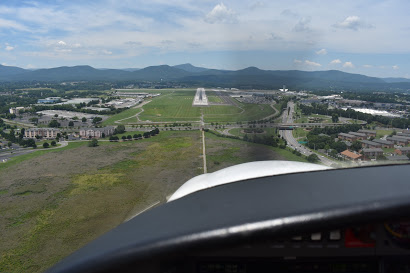
“This $1.2 billion federal investment will improve our nation’s airport infrastructure, enhance safety, and strengthen growth in local communities, which is especially important as the economy recovers from COVID-19,” said Secretary Chao. The grants are comprised of more than $1 billion from the Airport Improvement Program (AIP) and $152 million from the Coronavirus Aid, Relief and Economic Security (CARES) Act. No state or local funding match is required.
In Virginia the funds will support:
- The reconstruction of runway lighting at Tazewell County Airport ($148,000);
- Improvements to the terminal building along with the reconstruction of airfield guidance signs, runway
- lighting and taxiway lighting at Charlottesville/Albemarle Airport ($606,412);
- A runway extension at Virginia Tech/Montgomery Executive Airport ($1,289,417);
- Reconstruction of airfield guidance signs, runway lighting and taxiway lighting at Roanoke/Blacksburg
- Regional Airport ($4,065,070); and
- Reconstruction of a runway at Washington Dulles International Airport ($12,272,026).