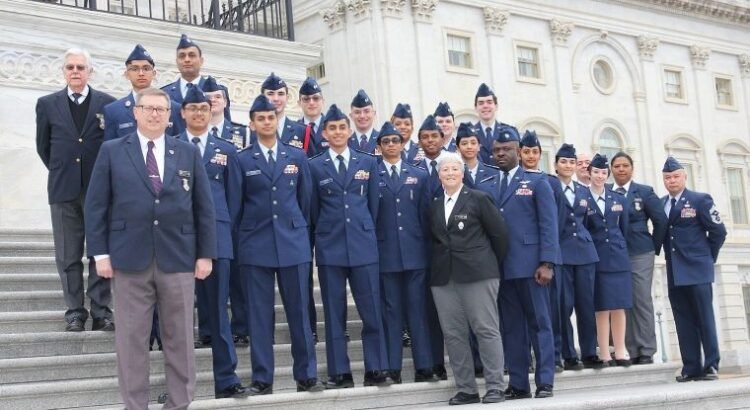
Civil Air Patrol cadets and senior members from New Jersey recently traveled to Washington, D.C., to advocate for Civil Air Patrol’s missions and demonstrate the organization’s measurable impact on communities across the state and nation.
“Our members represented New Jersey with exceptional professionalism and confidence,” said CAP Col. Amy Myzie, commander of the New Jersey Wing. “National Legislative Day allows us to engage directly with elected officials and demonstrate how Civil Air Patrol supports our communities, our state and our nation. I am incredibly proud of how our cadets and senior members articulated our mission and strengthened key relationships.”
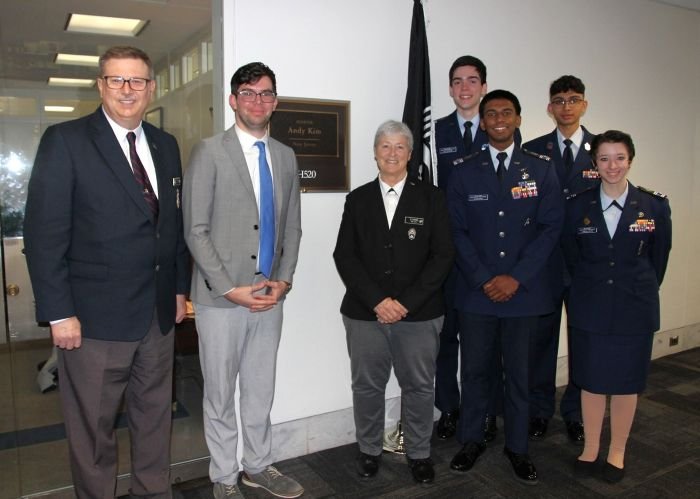
During meetings on Capitol Hill, the delegation detailed how the New Jersey Wing serves the Garden State through disaster response during severe weather, coordinated aerial search missions with state agencies and youth leadership development in 22 local squadrons. Members also emphasized the measurable return on investment for the U.S. Air Force and New Jersey through volunteer-led search and rescue operations, operational training and STEM education initiatives.
Civil Air Patrol’s aerospace education programs support local schools and homeschools with K-12 STEM curricula, textbooks and project kits focused on aviation, space and cyber. Teacher enrichment initiatives — including educator orientation flights — bring scientific principles to life in classrooms.
“I always look forward to meeting with Civil Air Patrol members during National Legislative Day,” said U.S. Rep. Chris Smith, R-N.J. “The work you do in emergency services, aerospace education and cadet development makes a real difference in our communities, and I strongly support your mission.”
For many cadets, the event offered a firsthand look at civic engagement in action.
“Meeting with congressional officials was an incredible experience,” said Cadet Maj. Luke Patterson. “It was an honor to share how Civil Air Patrol has shaped my leadership skills and to explain the impact our wing has in New Jersey. Representing our cadets at the national level was both humbling and inspiring.”
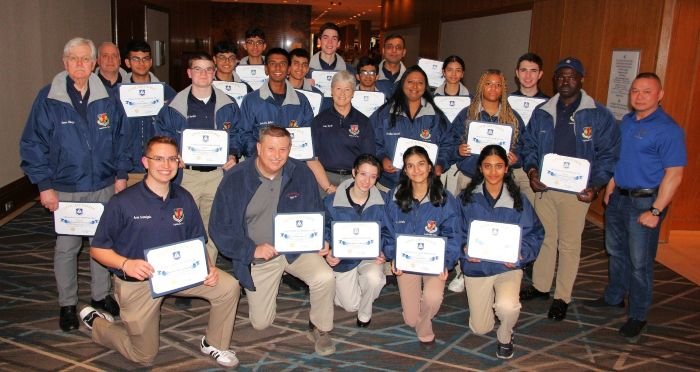
The delegation also met with Civil Air Patrol National Commander Maj. Gen. Regena Aye, sharing their service experiences and briefing her on programs underway throughout New Jersey. Beyond Capitol Hill, cadets toured the Pentagon and explored the National Air and Space Museum, gaining insight into national defense operations and the history and future of aviation and space exploration. They also visited the United States Air Force Memorial, where the soaring spires and solemn setting inspired a profound sense of pride, sacrifice and reverence for the men and women who have served in the nation’s Air and Space Forces.
Civil Air Patrol serves nearly every congressional district nationwide, as well as Puerto Rico and Washington, D.C., making it an organization of national interest to Congress.
Funded through the annual Defense Appropriations bill, Civil Air Patrol returns nearly $4 in value for every federal dollar invested; in 2024 alone, CAP programs saved the nation an estimated $281 million. CAP’s cadet program impacts more than 32,000 youth nationwide, developing responsible, confident leaders through weekly meetings, summer encampments, flight training, internships and international exchanges.
Cadets from New Jersey who participated were Cadet Lt. Cols. Erin Feeney, Nathaniel Hawkins, Aniruddha Kulkarni, Floria Nehe, Emma Rollins and Aaron Szumigala; Cadet Majs. Ishaan Agarwal, Yeshika Bhansali, Luke Patterson and Michael Shayevich; Cadet Capts. Darsh Shah and Aditya Shinde; Cadet Chief Master Sgt. Shloke Chaudhari; Cadet 2nd Lts. Lohitaksh Arige, Sara Chitnis and Isabella Lancellotti; and Cadet 1st Lt. Micah Blum. Senior members accompanying the cadets were CAP Col. Amy Myzie, CAP Lt. Cols. Robert Jennings, Bill Petzinger, Michael Sperry and Jacob Umoke; CAP Maj. Peter Hinge; and CAP 1st Lts. Anant Chaudhari, Purnima Kulkarni and Jeffrey Polizzi.
Civil Air Patrol is the official auxiliary of the U.S. Air Force and a component of its Total Force. In this role, CAP operates a fleet of 560 single-engine aircraft and 1,550 small unmanned aircraft systems. The organization performs approximately 90% of continental U.S. inland search and rescue missions as tasked by the Air Force Rescue Coordination Center and is credited with saving an average of 82 lives annually. CAP’s 66,000 members also conduct homeland security, disaster relief and drug interdiction missions at the request of federal, state and local agencies. As a nonprofit organization, CAP plays a leading role in aerospace and STEM education and mentors more than 28,000 youth through its Cadet Programs.