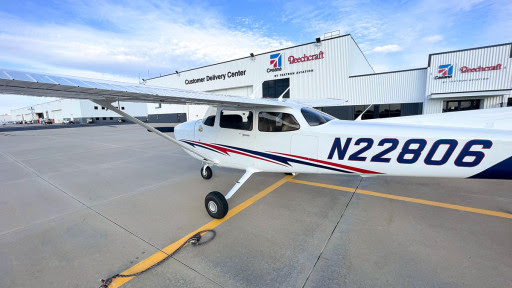
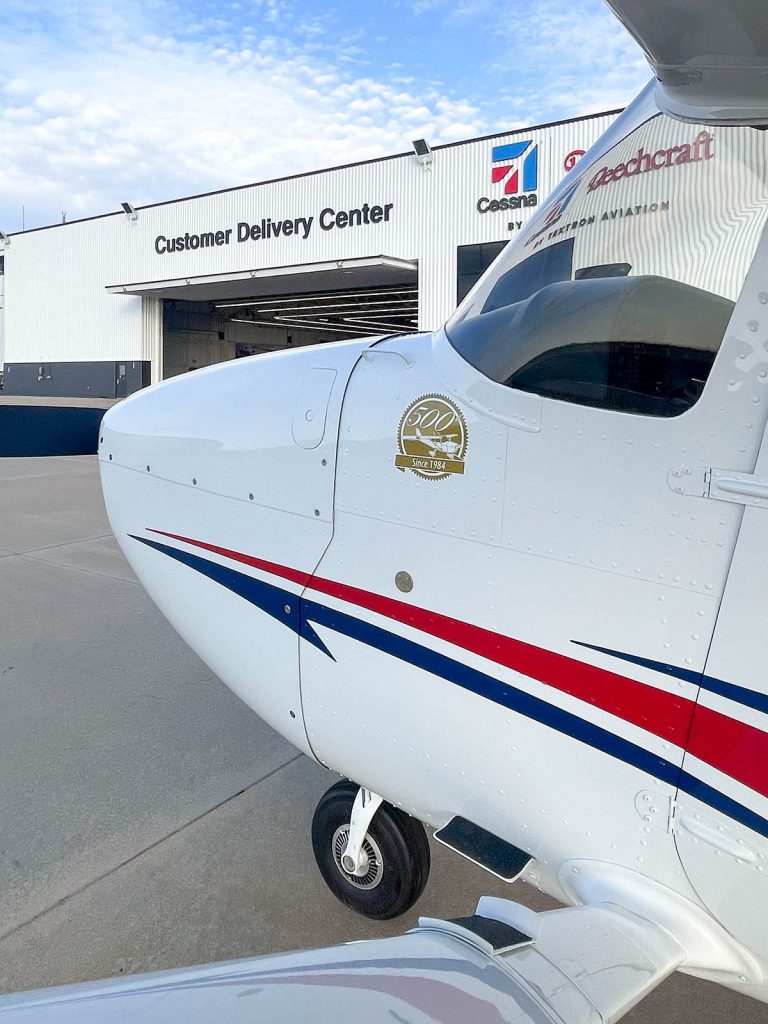
On Thursday, ATP Flight School took delivery of five new Cessna Skyhawks and surpassed the fleet milestone of 500 aircraft. Each new plane brings ATP students a state-of-art training platform with Garmin’s G1000 NXi Integrated Flight Deck. The Skyhawks join the 86 new aircraft ATP has taken delivery of since 2020 and will be used exclusively for airline pilot training and career development.Â
ATP’s investment in new aircraft is paired with equal investment in flight safety and monitoring. ATP recently completed a 40% expansion of its operations center in Jacksonville Beach, Florida, to accommodate growing safety and quality assurance teams. To support the safe operation of 500 aircraft, ATP’s safety department integrates an airline-based Safety Management System (SMS) and provides Flight Operations Quality Assurance (FOQA) through real-time oversight of all training flights using ADS-B technology.
“Reaching the milestone of a 500 aircraft fleet is significant, not just in scale, but for the operational support required to provide a safe and dependable training environment for our students,” said Michael Arnold, Director of Marketing, ATP Flight School. “The capabilities and advancement of ATP’s flight operations center mirror that of airlines, with maintenance, flight operations, flight safety, flight standards, and quality assurance teams working in unison to promote a high level of safety and support for our students. The milestone of 500 planes is only made possible through the commitment each ATP team member has to the training success of our students and providing a reliable state-of-art fleet operated in a safety-focused environment.”
As the leading provider of new hire airline pilots, ATP’s fleet expansion will increase capacity to graduate 20,000 airline pilots by 2030. Deliveries of an additional 85 new aircraft are scheduled throughout 2023 and 2024.