By Dustin Zeitler
I’ve spent more than two decades working in the aviation industry and in that time seen cycles of growth, consolidation, and reinvention. One thing, however, has never changed: aviation rewards those who respect the details, which is what led us to start RealClean and after a great deal of deliberation—to become the first aviation-specific aircraft detailing franchise system of its kind. However, franchising was not our original plan.
Like many companies, we initially explored expanding through larger company-owned corporations. The industry was consolidating rapidly, and large groups were buying up independent detailing companies across the country. As this happened, I began to notice a shift. Highly skilled technicians were absorbed into larger organizations, and refined services were gradually stripped down. What had once been specialized, relationship-driven work turned into basic washes and interior cleanings. The craftsmanship that operators expect became harder to find.
Aircraft detailing is not a commodity service. It is trust-based. When a detailer does the job right, they earn a client for life. When they don’t, that relationship ends quickly—and often permanently. You can’t manage that level of accountability from a distant office.
That realization forced a fundamental question: how do you grow without diluting standards?
For us, the answer was ownership.
Franchising, when executed correctly, aligns perfectly with how aviation already works. It puts vested owner-operators on the hangar floor—people whose reputations, relationships, and livelihoods are directly tied to the quality of every aircraft they service. These are not transient regional managers. These are local aviation professionals invested in their communities and accountable to their clients.
There’s a misconception that franchising is simply about licensing a name and logo. In aviation, that approach would fail immediately. What actually matters is execution: standardized operating procedures, disciplined training, consistent product usage, and ongoing quality control. An aircraft detailed in Tennessee should meet the same standard as one detailed in the Midwest or the Southwest—every time.
To ensure consistency, our franchise partners receive hands-on training, regular inspections, education on the uses and applications of our proprietary products & equipment, and real-time operational support. We’re involved when it matters most—helping demonstrate services, close complex opportunities, and support large fleet accounts. In several cases, that hands-on involvement has directly resulted in long-term contracts and multi-aircraft relationships for our partners.
Equally important is the business side of the operation. Aviation professionals understand that great work alone doesn’t sustain a business. Franchising allows us to support our partners on billing, receivables, and performance metrics—ensuring that quality work is matched by a healthy operation behind the scenes.
Technology has also become a critical piece of this model. When I started, none of the tools we now take for granted existed. Today, purpose-built systems allow franchise teams to quote accurately in the hangar, follow standardized procedures, and close work in real time—bringing professionalism and efficiency to a part of aviation that has long operated informally.
The aviation industry is growing. Fleets are expanding. Expectations are rising. And operators are becoming more selective about who they trust around their aircraft.
In that environment, scale alone is not the answer.
The future of aircraft detailing—and many aviation support services—will belong to models that combine disciplined systems with personal accountability. Franchising does exactly that. It preserves craftsmanship while enabling responsible growth. It keeps ownership close to the aircraft while maintaining national standards.
After more than 20 years in this industry, I’ve learned that aviation doesn’t reward the fastest path forward—it rewards the right one. Franchising, for us, wasn’t just a business decision. It was the only way to grow without compromising the standards that aviation demands.
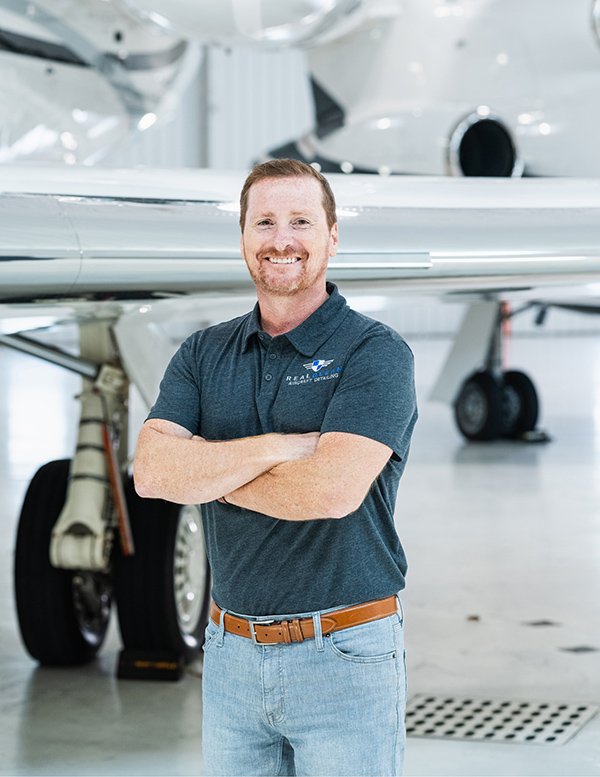
Above Op-Ed is from Dustin Zeitler, a 20-Year Veteran and Co-Owner of RealClean Aircraft Detailing.