By Kim Stevens –
Frank Farmer has seen a lot of change during his more than thirty years in aviation. Perhaps the biggest change for the current Bureau Chief of the Alabama Department of Transportation, Aeronautics Bureau and recently elected Chair for the National Association of State Aviation Officials (NASAO) has been in technology.
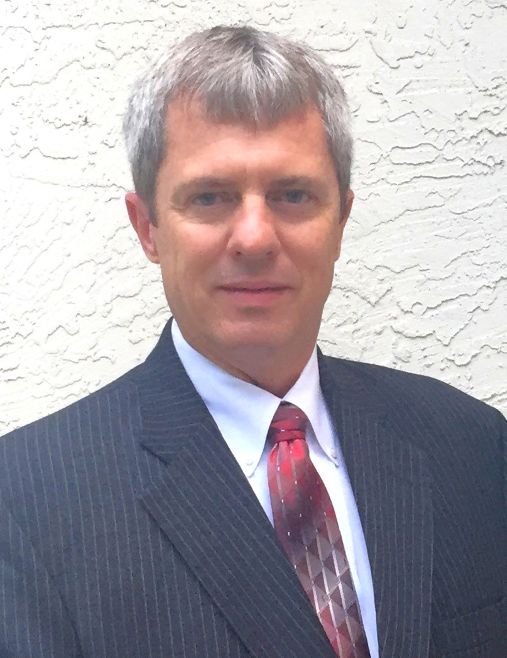
“When I started in aviation, we were developing Airport Layout Plans (ALP) and Airport Master Plans to prepare airports for the transition to GPS approaches. At the time, there was some discussion about Microwave Landing Systems, but GPS ultimately proved to be the more promising technology.”
Fast-forward more than 30 years, and the Bureau is now preparing for the next generation of aviation, including advanced air mobility and other emerging aircraft technologies. “It has been interesting to see that evolution,” noted Farmer.
The Bureau Chief has also experienced significant changes within Alabama’s aviation program. He started when the agency was still the Alabama Department of Aeronautics before becoming part of the Alabama Department of Transportation as the Aeronautics Bureau. That transition created new opportunities for them, including becoming a Channeling Act state and taking on a greater role in helping manage federal airport improvement funds.
“One thing I’ve learned over the years is that you can’t be afraid of change. You have to keep learning and be willing to adapt as the industry evolves,” said Farmer. “Aviation has changed tremendously during my career, and I expect that pace of change will continue.” Farmer said their job is to look ahead, understand those changes, and make sure the airports in Alabama and the Bureau’s programs are ready to meet the future.
Farmer believes his experience at the state level has given him a perspective that is very valuable at the national level. “Every state has many of the same challenges, but every state also has its own unique circumstances,” said Farmer. “After more than 30 years working in a state aviation agency, I’ve had the opportunity to experience a broad range of issues.”
As the new NASAO Chair, that experience will go a long way in helping him lead the nearly 100-year-old agency through the coming year. “I’ve been involved with NASAO since the 80th NASAO Convention and Tradeshow held in Nashville, Tennessee, back in 2011, so I’ve had the opportunity to see the value that NASAO brings to state aviation agencies for many years,” said Farmer. “I’ve watched a lot of strong leaders serve as chairman during that time, and each of them has left their mark on the organization.”
Farmer believes that working his way through the NASAO leadership structure has prepared him well for the chairmanship. “It has allowed me to work closely with other state aviation directors; understand the different challenges they face and learn how to build consensus among people who may not always see an issue the same way.”
Looking back, aviation wasn’t something that Farmer had always planned to pursue. “I actually didn’t grow up in a family of aviators. I attended Auburn University and wasn’t particularly happy with the major I had originally chosen. One day, I was looking through the academic catalog and noticed a major called Aviation Management. I thought that sounded interesting, so I changed my major, and I never looked back.”
At the time, Farmer had no idea just how fulfilling a career choice he had made. “I certainly couldn’t have imagined that it would lead to more than 30 years working in state aviation, becoming Chief of the Aeronautics Bureau, and now serving as Chairman of NASAO,” added Farmer. “It’s been a rewarding journey, and I’ve had the opportunity to work with a lot of great people along the way.”
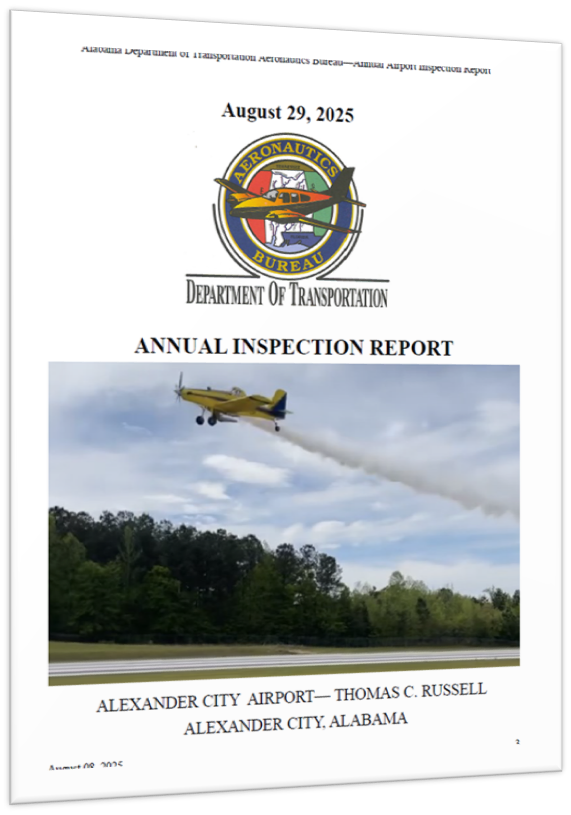
Looking back, Farmer believes his experience working directly with Alabama’s airports has been one of the biggest things that prepared him for the position of Bureau Chief. “I started with the Department of Aeronautics as an intern and eventually became an airport inspector. I spent a lot of time visiting airports, conducting inspections and seeing firsthand the condition of Alabama’s airport system,” noted Farmer.
Over the years, he has had the opportunity to watch many of the state’s airports grow and develop, but he’s also been through some of the challenges with them. “Alabama has historically had very limited state aviation funding, so we’ve had to be creative and work together to make the most of the resources available to us, said Farmer. “By being closely involved with our airports, I’ve developed a real appreciation for what our airport sponsors deal with every day.”
The relationships that Farmer built over the years has been extremely important. “I’ve worked with many of our airport sponsors for decades, so when I became Bureau Chief, I already had a strong level of trust and familiarity with the people I was working with. That made the transition much easier.”
Farmer said he was also fortunate for most of his career to have Dr. John Eagerton [retired Bureau Chief] as not only his supervisor but as a mentor. “He gave me opportunities to become involved in different aspects of the program and encouraged me to grow professionally,” said Farmer. “A lot of what I’ve learned over the years came from people who were willing to give me an opportunity and let me learn from the experience.”
Looking ahead, Farmer thinks the future for aviation and aerospace in Alabama is very exciting. “Alabama has developed a remarkable aerospace and aviation ecosystem that reaches from Huntsville and north Alabama all the way to Mobile and the Gulf Coast.”
Farmer believes that Alabama has the space and defense capabilities in Huntsville, major aerospace manufacturers such as Airbus in Mobile, and a strong network of companies, suppliers, universities and military installations throughout the state. “From the Aeronautics Bureau’s perspective, our job is to make sure the airport system is ready to support that growth. Airports aren’t just transportation facilities—they are economic development assets. Companies looking at Alabama need reliable airports, good infrastructure and communities that are prepared to support aviation and aerospace activity.”
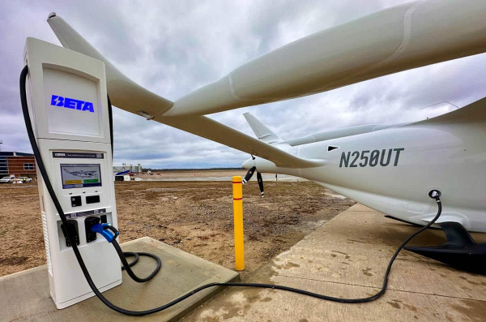
The Bureau is also looking ahead to emerging technologies. Alabama is conducting a statewide Advanced Air Mobility study to look at future infrastructure needs, including vertiports, electric aviation charging infrastructure and other requirements associated with new aircraft technologies. “That’s an area where aviation, economic development and transportation planning are going to increasingly intersect,” said Farmer. “So, when I look at Alabama’s future, I see a state that has a strong aviation foundation and a lot of opportunity to build on it.”
As Farmer looks over the horizon on the national level, one of the NASAO Board’s primary focuses this year will be preparing for the next FAA reauthorization. “NASAO has already been working through our Legislative Affairs Committee to identify the issues that are most important to state aviation agencies, and we’ll be working to develop a clear set of priorities for the next reauthorization effort.”
Farmer also wants the Board to remain focused on the organization itself and on serving members. “NASAO is most effective when we’re bringing state aviation officials together, sharing ideas and best practices, and making sure the states have a strong voice in the national aviation discussion,” said Farmer. “That’s really what NASAO is about. We’re 50 states, and we’re not always going to have identical priorities. But we have a lot of common ground, and I think the role of the chairman is to listen, bring people together and help the organization find the common ground that allows us to move forward.”