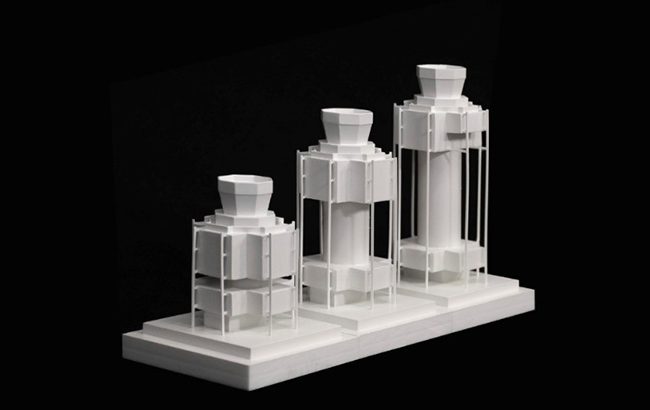
The Federal Aviation Administration (FAA) has selected a sustainable design for new air traffic control towers that will be used primarily at municipal and smaller airports. The design by Practice for Architecture and Urbanism (PAU) of New York meets key sustainability requirements and can adjust the tower height to meet each airport’s traffic and sightline requirements, while also reducing construction and operational costs.
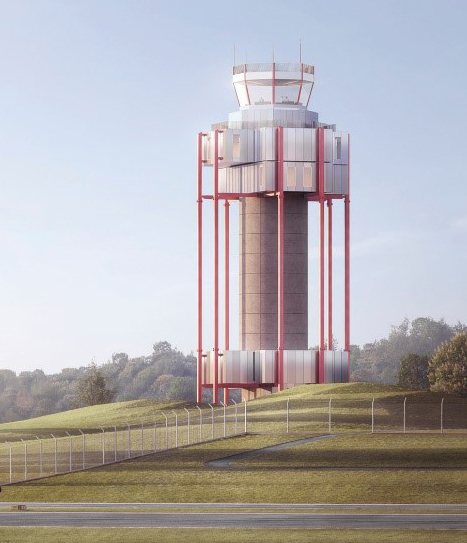
The design incorporates key sustainability elements, including:
- All-electric building systems
- Materials and products free from chemicals known to pose health risks
- Thermally efficient façade
- High-recycled steel and metal products
- Renewable mass timber when usable
- Ground-source heating and cooling in some environments.
“These new air traffic control towers will mean that smaller airports can handle more flights, more sustainably and more affordably,” said U.S. Transportation Secretary Pete Buttigieg. “I look forward to seeing this design go from the drawing board to construction sites across the country, helping our nation’s airports support more travelers, grow their local economies and prepare for the future of low-carbon aviation.”
The FAA’s preferences included that the design have standardized elements to reduce construction and operational costs while allowing for the building to be tailored to local climate and location issues such as very high and very low temperatures, wet and dry environments, and high winds.
The initial set of 31 control towers at candidate airports (pg. 664) would replace towers that are functioning beyond their intended design life. The towers will range in height from 60 to 119 feet. The FAA has set aside more than $500 million from the Bipartisan Infrastructure Law to support site evaluation, preparation, and early construction activities.
The first groundbreaking could begin in 2024.