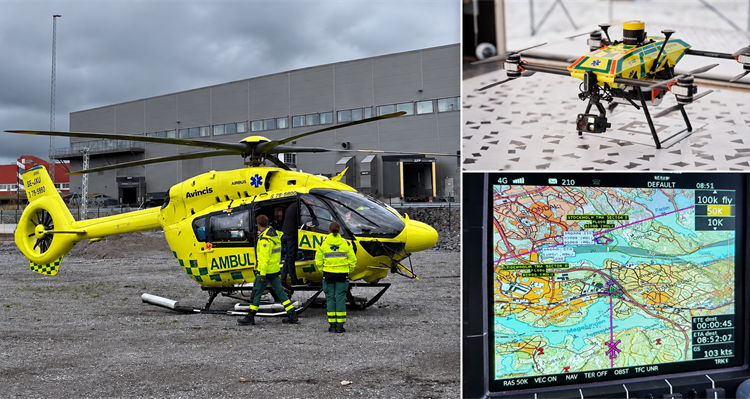
Photo – Everdrone E3 and Avincis’ air ambulance helicopter. The drone broadcasts a FLARM signal, which enables its position to be displayed on the helicopter’s navigation system. –
Everdrone and emergency aerial services operator Avincis have successfully tested electronic conspicuity between Everdrone’s drones and an air ambulance helicopter in Stockholm.
“It is essential to us that drones are not developed as a separate system operating alongside manned aviation”, says Mats Sällström, CEO of Everdrone.
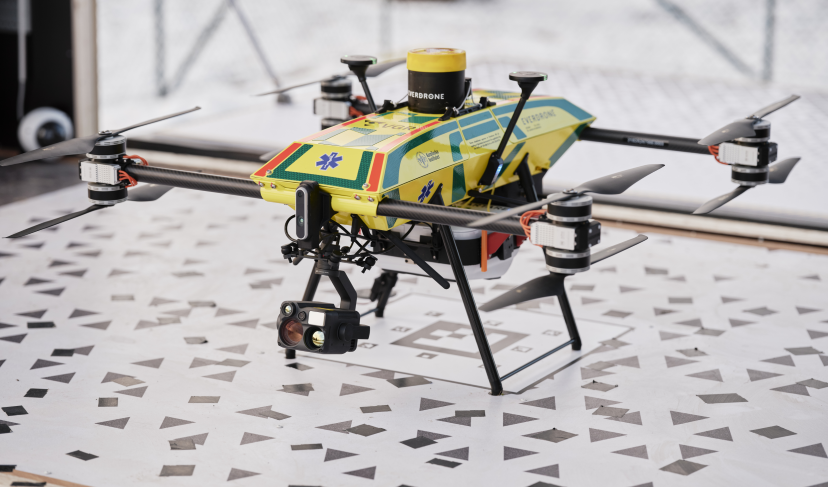
The test took place in Stockholm on 11 September in collaboration with Avincis, which operates air ambulance services on behalf of regional health authorities and hospitals. Everdrone’s E3 drone uses FLARM to electronically broadcast information, including its position. A new feature in the air ambulance helicopter now allows this information to be received and the drone to be displayed on a system already used by the pilot during routine flight operations.
“If drones are to become an integral part of emergency medical services, they must also be able to operate safely alongside aircraft such as air ambulance helicopters. This test shows how we can take another step towards an integrated airspace where manned and unmanned traffic can coexist”, says Mats Sällström.
Previously, information about Everdrone’s drones could be made available to manned aircraft through separate digital solutions. The difference now is that this information can be integrated into one of the primary systems the pilot already uses during flight.
“Flight safety is always our highest priority. If we cannot ensure the safety of the air ambulance helicopter, we cannot help the patients who need us. Everdrone has shown a strong commitment to finding long-term solutions, which has been crucial to our ability to operate together in shared airspace. We have now taken an important step forward and demonstrated that manned and unmanned aircraft can safely share the same airspace”, says Rickard Gillberg, Head of Flight Operations at Avincis.
For several years, Everdrone has been developing systems and operational procedures that allow drones to fly safely while integrating with other air traffic. Electronic conspicuity is a key part of this work.
“From the outset, our ambition has been to be at the forefront of airspace safety and regulatory matters. The next step focuses largely on making drones a visible and integral part of the airspace they share with manned aircraft. The better we can integrate drones into existing systems and operational procedures, the better positioned we will be to scale up drone services that benefit society”, says Mats Sällström, CEO of Everdrone.