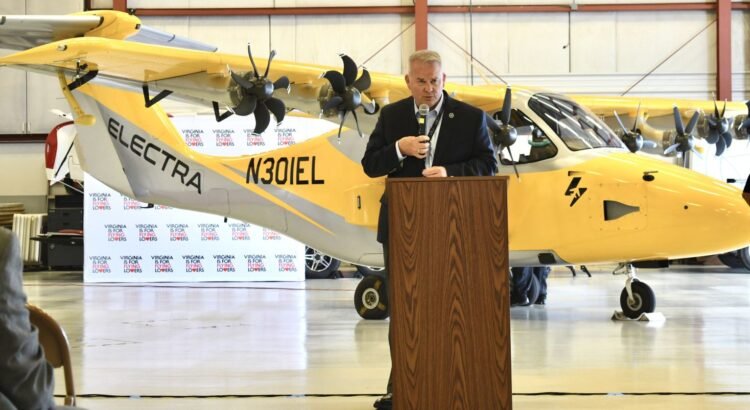
Photo – Greg Campbell, Director of the Virginia Department of Aviation.
The Virginia Department of Aviation and industry partners have completed the second Virginia flight demonstration of the U.S. Department of Transportation and the Federal Aviation Administration’s eVTOL Integration Pilot Program (eIPP), highlighting the future of air transportation in the Commonwealth and across the United States.
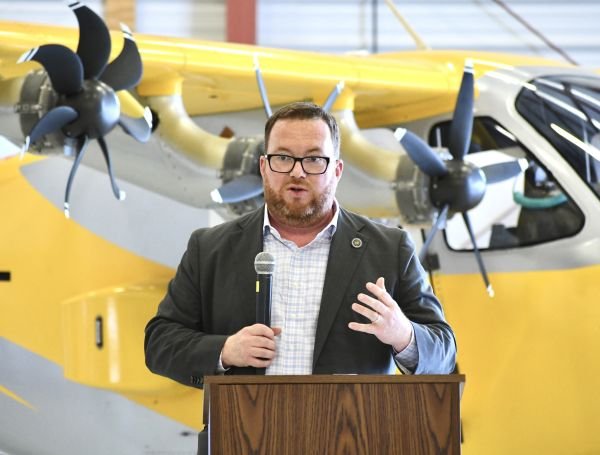
Nick M. Donohue
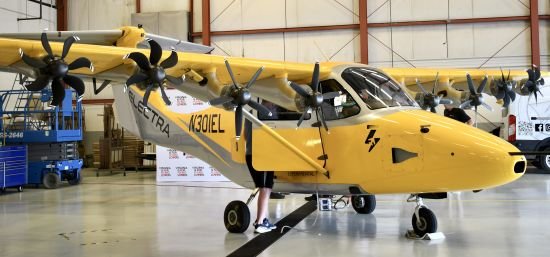
The demonstration showcased Electra’s EL2 Ultra Short technology, which has the ability to take off and land in as short as 150 feet, opening new locations for air service to underserved urban environments and making regional travel faster, more affordable, and more accessible. The event underscored the Commonwealth’s commitment to advancing innovation, strengthening the regional aerospace industry, and positioning Virginia as a hub for emerging aviation technologies. The demonstration is part of the Federal Aviation Administration’s (FAA)’s eVTOL Integration Pilot Program (eIPP) to accelerate the safe deployment of Advanced Air Mobility (AAM) vehicles in the National Airspace System.
Advanced Air Mobility represents the next generation of technology in air transportation. AAM encompasses a new generation of aviation, including electric vertical takeoff and landing (eVTOL) aircraft that are quieter, cost effective, and lower‑emission than traditional aircraft. This emerging technology creates near-endless opportunities for connecting communities more easily, improving access to essential services, enhancing emergency response capabilities, and supporting economic growth through faster, more flexible transportation options.
Virginia’s continues to lead the way in AAM advancement and the Commonwealth’s participation in the eIPP initiative marks one of the nation’s first operational demonstrations of this innovative technology. The inaugural flights highlight the vast potential of the next generation of aviation, showcasing just a few of its many real‑world applications, from cargo transport and medical deliveries to public safety operations, workforce mobility, and future passenger travel. Through these early demonstrations, Virginia is helping to establish the national framework for safely and seamlessly integrating AAM aircraft into the existing aviation system and positioning the Commonwealth as a national leader in the deployment and real‑world utilization of this transformative technology.
“Advanced Air Mobility represents one of the most significant innovations in aviation in decades,” said Greg Campbell, Director of the Virginia Department of Aviation. “Virginia is committed to supporting these emerging technologies because they will expand access, strengthen communities, and create new opportunities for citizens across the Commonwealth. We are proud to help lead the nation in demonstrating how AAM can be safely integrated into our existing aviation system.”
Earlier this summer, Beta Technologies successfully conducted the first test flight as part of the eIPP initiative. The demonstration highlighted a fully electric aircraft’s ability to conduct controlled operations within an active airspace environment and provided valuable data on performance, communications, and air traffic integration.
The completion of these AAM flights marks a significant milestone for Virginia and demonstrates the Commonwealth’s commitment to advancing safe, sustainable, and forward-looking aviation technologies that will shape the future of transportation in Virginia.