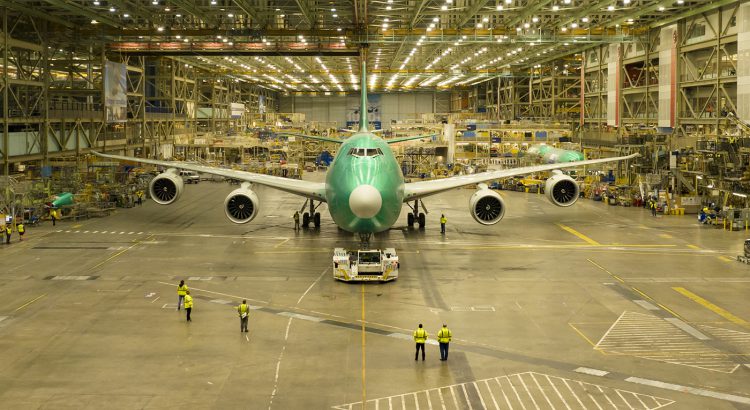
The last Boeing (NYSE: BA) 747 left the company’s widebody factory in advance of its delivery to Atlas Air in early 2023.
“For more than half a century, tens of thousands of dedicated Boeing employees have designed and built this magnificent airplane that has truly changed the world. We are proud that this plane will continue to fly across the globe for years to come,” said Kim Smith, Boeing Vice President and general manager, 747 and 767 Programs.
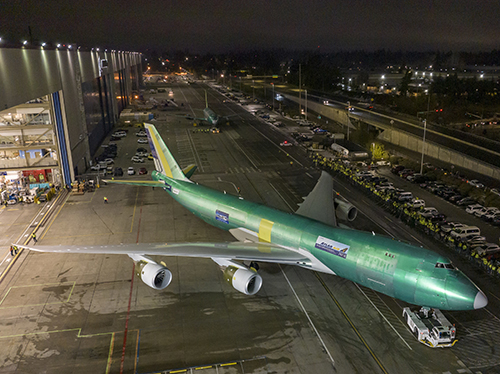
The 747 has played a key role in Boeing’s history of aerospace leadership.
Production of the 747, the world’s first twin-aisle airplane, began in 1967 and spanned 54 years, during which a total of 1,574 airplanes were built.
At 250 ft 2 in (76.2 m), the 747-8 is the longest commercial aircraft in service. At typical cruising speeds, the 747-8 travels roughly the length of three FIFA soccer fields or NFL football fields, per second.
The final airplane is a 747-8 Freighter. This model has a revenue payload of 133.1 tonnes, enough to transport 10,699 solid-gold bars or approximately 19 million ping-pong balls or golf balls.
As a leading global aerospace company, Boeing develops, manufactures and services commercial airplanes, defense products and space systems for customers in more than 150 countries. As a top U.S. exporter, the company leverages the talents of a global supplier base to advance economic opportunity, sustainability and community impact. Boeing’s diverse team is committed to innovating for the future, leading with sustainability, and cultivating a culture based on the company’s core values of safety, quality and integrity. Join our team and find your purpose at boeing.com/careers.