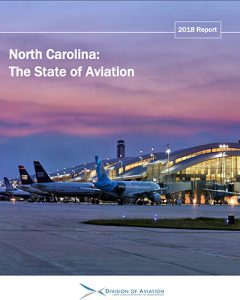
 North Carolina has been at the forefront of aviation technology since the Wright Brothers’ first flight at Kitty Hawk in 1903.
Today, the state is home to many of the biggest names in the aerospace and aviation industry. They choose North Carolina because of its connectivity, skilled workforce and business-friendly environment.
The N.C. Department of Transportation’s Division of Aviation has released the 2018 “State of Aviation” report, detailing the assets that support a vibrant and competitive aviation sector.
As described in the report, North Carolina boasts:
72 publicly owned airports, 10 offering regular commercial service;
$31 billion in annual economic impact from airports;
56 million passengers and 700,000 tons of cargo moved by aircraft every year;
18,000 licensed pilots and 15,000 aircraft mechanics;
14,000 jobs in aerospace manufacturing and maintenance;
32,000 registered drones; and
26 universities and community colleges that offer aviation and aerospace programs.
“The aviation sector in North Carolina is already strong and continues to grow by leaps and bounds,” said NCDOT Director of Aviation Bobby Walston. “This report highlights why our state is an ideal location to start, grow or relocate an aerospace or aviation-related business.”
The State of Aviation Report was produced by the Institute for Transportation Research at NC State University, and commissioned by NCDOT’s Division of Aviation. The full report can be found online.