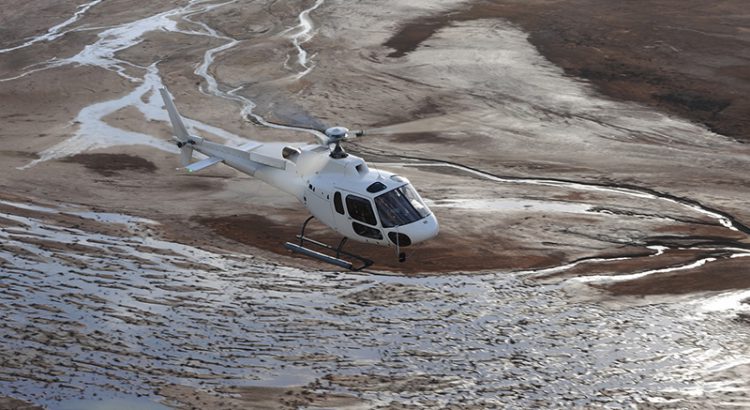
Florida Keys Mosquito Control District has ordered two new Airbus H125 helicopters to boost its mosquito fighting capabilities. Part of a fleet upgrade program, the two new H125s will support aerial spraying to control the mosquito population in the Florida Keys, off the southern coast of the state.
With a sub-tropical environment, the Keys regions from Key Largo to Key West is home to approximately 46 species of mosquitoes, and aerial spraying proves one of the most effective ways to combat mosquito-borne disease such as Zika virus and Dengue.
“The H125 is already the helicopter of choice for managing Florida’s large mosquito population. We’ve chosen the aircraft because of its ability to increase the coverage areas during a single mission, and to improve the safety of our operation,” said Joshua Kogut, Director of Aerial Operations at the Florida Keys Mosquito Control District. “We look forward to bringing the two aircraft on board to support our operations in the most efficient manner.”
Florida Keys is the third Florida district to turn to Airbus Helicopters in recent months to fight mosquitoes. In 2018, Lee County Mosquito Control District in southwest Florida purchased six H125 helicopters and in 2013, Brevard County Mosquito Control purchased two of the same aircraft type.
Deliveries of the new H125s for the Florida Keys should be completed by early 2020. The aircraft feature improved Isolair and AgNav equipment for conducting various mosquito control missions.
The district plans to operate each of the H125s for approximately 150-200 hours per year, with peak mosquito season running May through September.
“We are proud the Florida Keys Mosquito Control District has selected the H125 to help protect citizens and contain the mosquito population,” said Brian Reid, Senior Director of Sales for Airbus Helicopters Inc.