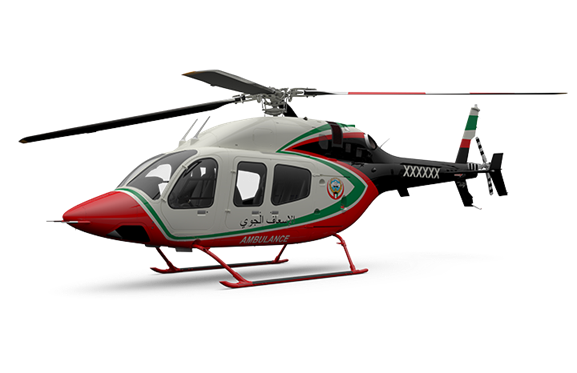
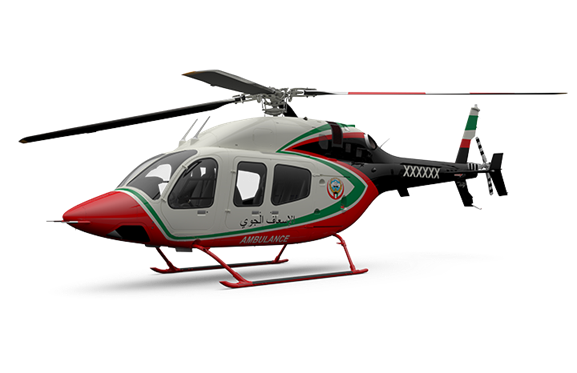
 Bell Helicopter announced last week the Ministry of Health in Kuwait will be operating the first two Bell 429s configured for Helicopter Emergency Medical Services (HEMS) in the Middle East. The purchase agreement for the aircraft was announced at the end of last year, and is a milestone win for the region.
The Ministry of Health will be contracting the EMS Bell 429 through Al-Safwa Security and Defense Systems Company, with an expected delivery time of April 2015.
“This organization has been able to assemble this complex life-saving program in just a short amount of time, and we are honored to be involved in such an undertaking,” said Steve Suttles, vice president and director of Middle East and African sales. “The Bell 429 will provide the advanced support and exceptional performance they need during these demanding missions.”
The Ministry currently operates two Bell 430s to complete their helicopter emergency medical services requirements.
“We chose the Bell 429 because it is the best platform for HEMS operations in the Middle East, offering a large cabin with a fully flat floor providing the ability to quickly change the cabin configuration,” said Ali Al-Fodari, managing director of Al-Safwa. “As a pilot and as a person who wants to operate only the best equipment for the job, I am excited to upgrade our fleet with the highly advanced capabilities of the Bell 429.”
The Bell 429 is one of the most advanced light twin helicopters ever developed, offering a fully integrated glass cockpit with advanced drive system and best-in-class WAAS navigation and IFR capability. Additional safety features include a collective mounted throttle, damage tolerant hub and rotor system, and energy attenuating seats. It is the first helicopter certified through the MSG-3 process, resulting in reduced maintenance costs for operators.