Members of the Massachusetts Airport Managers Association (MAMA) Legislative Committee travelled to Beacon Hill on June 17 to brief lawmakers on key aviation issues and thank them for their support of Massachusetts’ 37 public use airports through the MassDOT Aeronautics Division.
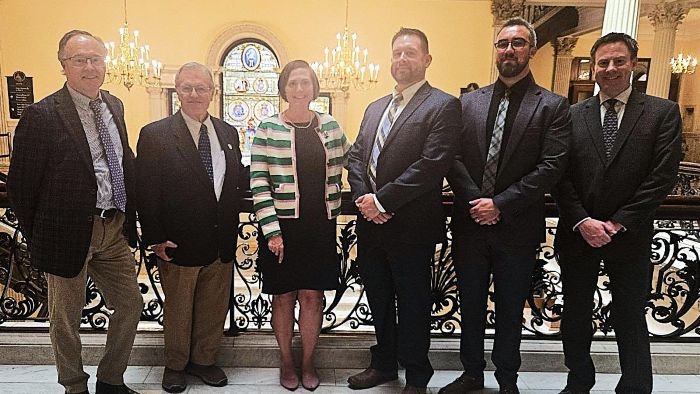
The briefings were conducted in the offices of Senator Jamie Edlridge, Senate Chair of the Revenue Committee; Senator Brendan Crighton, Senate Chair of the Transportation Committee; Representative Adrian Madaro, House Chair of the Revenue Committee; Representative Michelle Badger, Member of the Aviation Caucus; Senator John Velis, Senate Chair of the Aviation Caucus; and Senator Mike Rodriques, Senate Chair of the Ways and Means Committee.
The MAMA delegation stressed the need to retain the sales tax exemption on aircraft and aircraft components in order to preserve $1 billion in state and local revenue and more than 200,000 aviation-related jobs in the Commonwealth.
Delegates also acknowledged Governor Maura Healey’s signing of the state’s Supplemental Budget which includes a new sustainable aviation fuels tax credit of up to $10 million per year for the next three years. The aim is to encourage the use of sustainable aviation fuels by airlines operating in Massachusetts and to promote the growth of the Massachusetts clean-fuels industry.
The Legislative Committee works with other MAMA committees including the Conference, Emerging Leaders, Environmental Affairs, Marketing and Scholarship Committees to promote the economic, public service and educational value of the state’s more than three dozen airports.