By Kim Stevens
From Bismark to Budapest, airports had record-breaking years in 2025. Throughout the U.S. and around the globe, the message was the same – passenger numbers were up.
“2025 was the busiest year in the history of the airport,” said Steven C. Hennigan, C.M., A.C.E., executive director and CEO of the Lee County Port Authority, which operates Southwest Florida International Airport (RSW) in Fort Myers as well as Page Field. “We appreciate the outstanding performance by all of our employees, airlines and airport business partners who support the traveling public every day. We are also grateful for the passengers that use RSW as their airport of choice.”
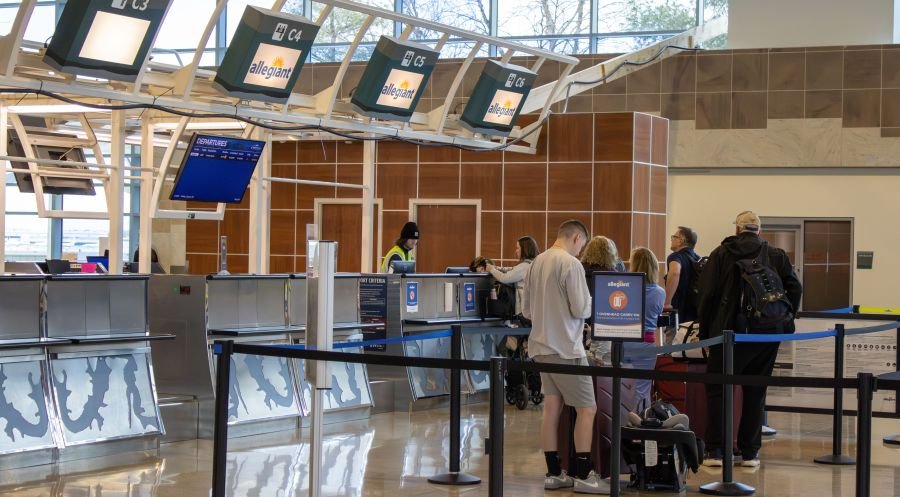
Annual passenger numbers set a record at Springfield-Branson National Airport in Springfield, Missouri as well, marking the third straight record year at SGF. In 2025, a record 1.55 million total passengers used the airport. That’s up 9 percent from the year before and up more than 70 percent since 2015.
“The Springfield airport continues to see year-over-year growth that outpaces the aviation industry,” said Brian Weiler, director of aviation at SGF. “1.5 million annual passengers is a milestone, and we are thankful to the community for flying Springfield.”
A surge in international travel propelled Ontario International Airport (ONT) to a record year in 2025. Ontario is making a compelling case for itself as the new global gateway for Los Angeles by posting a record number of international travelers in 2025, the result of expanded nonstop service to Latin America and Asia.
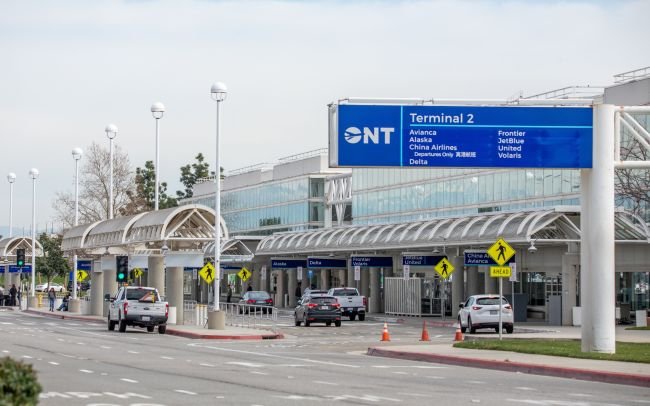
According to data released by the Ontario International Airport Authority (OIAA), ONT welcomed 567,000 international passengers last year, a nearly 30% increase over 2024. The sharp rise helped the airport surpass 7.1 million passengers overall for the year, the fifth consecutive year of post-pandemic passenger growth and the highest number since ONT’s transfer to local control in 2016.
“As a vital gateway for Southern California, Ontario International Airport marked another milestone year in 2025 demonstrating our capacity to meet growing air travel demand while many California airports continued to work toward full recovery,” said Alan D. Wapner, President of the OIAA Board of Commissioners. “We are particularly gratified by the growth in international travel. Greater Los Angeles is the second-largest air travel market in the United States and the sixth-largest in the world. A region of this scale merits more than one global gateway, and Ontario International is stepping up to meet that demand by delivering a world- class customer experience defined by convenience and the infrastructure necessary to support continued growth.”
Internationally, several European airports recorded very strong growth, according to VINCI Airports, a private airport operator. The airports of Budapest and Edinburgh, the latest additions to the VINCI Airports network, delivered remarkable performances: Budapest airport is experiencing double-digit growth, driven by the dynamism of airlines easyJet, Ryanair, and Wizz Air across all their markets. Mediterranean connections, especially to Spain, Italy, Turkey, and Israel, are registering significant peaks. Meanwhile, Edinburgh airport shows a solid growth, also supported by the rise of flights to Mediterranean destinations and the British domestic market. Belgrade airport traffic continues its impressive progression, driven primarily in Q4 by the expansion of Wizz Air’s routes to Western Europe.
Back in the U.S., North Dakota set new all-time airline passenger records in 2025. The North Dakota Aeronautics Commission (NDAC) released its 2025 annual report, confirming that calendar year 2025 was the strongest year for commercial air travel in state history.
View the ND 2025 Calendar Year Airline Boarding Report
North Dakota’s eight commercial service airports recorded 1,322,791 airline passenger boardings, surpassing the previous record set in 2024 and marking the first time the state has exceeded 1.3 million departing passengers in a single year. This represents an increase of 76,271 passenger boardings and a 6 percent year-over-year growth rate, continuing a multi-year trend of sustained momentum.
When combined with arriving passengers, more than 2.6 million total airline passengers traveled through North Dakota’s commercial airports in 2025.
“Reaching more than 1.3 million annual passenger boardings for the first time confirms that North Dakota’s air service system is performing at an exceptionally high level,” said Kyle Wanner, Executive Director of the North Dakota Aeronautics Commission. “Our airports are delivering strong demand, outstanding reliability, and disciplined capacity growth that positions North Dakota well for continued growth.”
Throughout 2025, North Dakota’s airports also maintained an average aircraft load factor of approximately 80 percent in 2025, demonstrating strong passenger demand and efficient use of airline capacity. These performance trends signal strong potential for additional routes, frequencies, and aircraft upgrades across North Dakota’s commercial service airports.
Despite challenging winter weather conditions, North Dakota’s airports also outperformed national reliability averages, reinforcing the state’s reputation as a dependable and operationally resilient air service market.
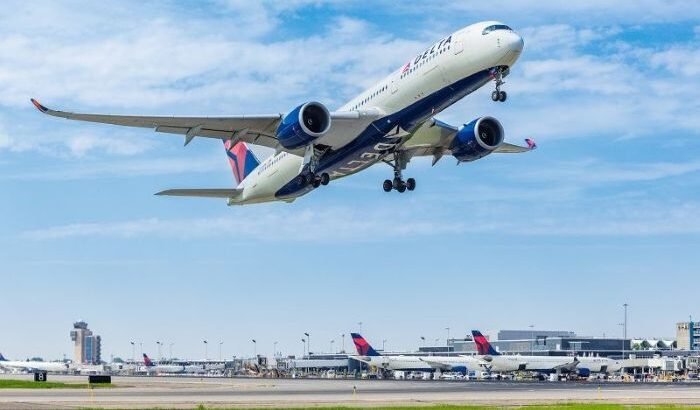
Despite a decline in domestic numbers, in 2025, Minneapolis International Airport (MSP) set records in both international destinations at 35 and total international passengers at 3.61 million, equating to 10% of total passengers. MSP’s growth in international reach was amplified by Delta Air Lines’ new service to Copenhagen, Denmark (CPH), and Rome, Italy (FCO), giving travelers a total of eight nonstop European destinations from Minnesota.
“After four years of steady passenger growth at MSP, some airlines reduced their network and flight activity this past year due to industry challenges, including aircraft and pilot shortages,” said Brian Ryks, CEO of the Metropolitan Airports Commission (MAC), which owns and operates MSP. “Despite those economic headwinds, MSP continued to grow its total number of nonstop destinations anchored by expanded global routes and connectivity.”
Other airports seeing records and reporting note-worthy highlights included Greenville-Spartanburg International Airport and Memphis International. Three million travelers used GSP in 2025, marking another record-breaking milestone and its busiest year ever.
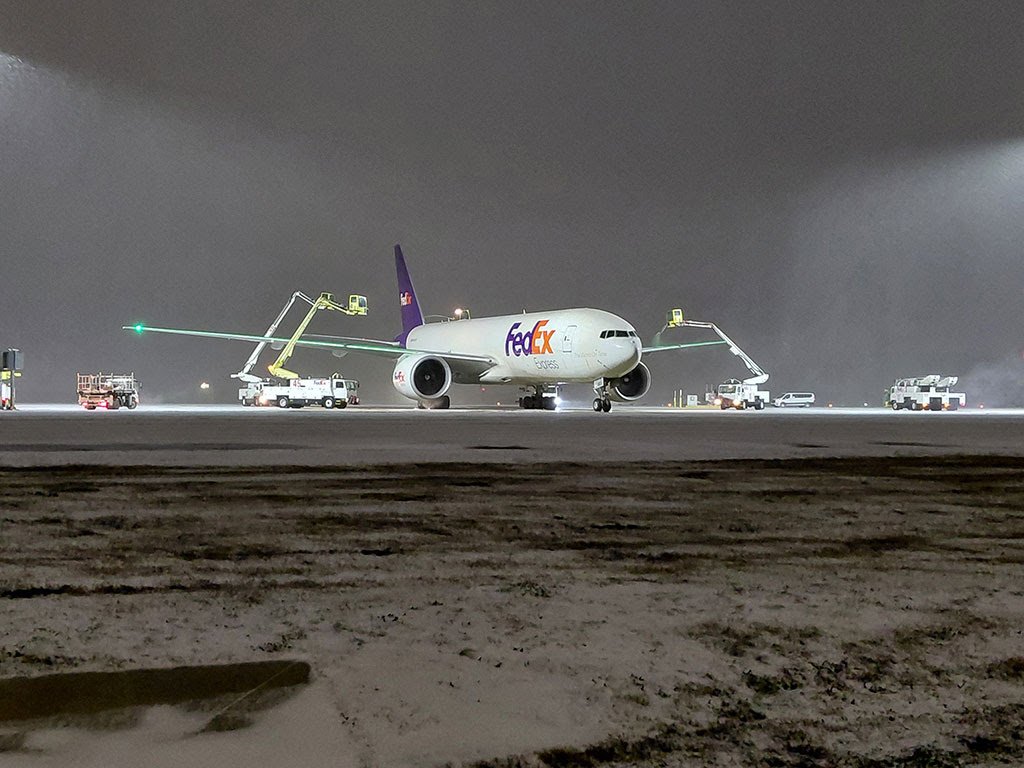
Memphis International Airport served 4.8 million passengers and handled 6.5 billion tons of cargo in 2025, and the Memphis-Shelby County Airport Authority (MSCAA) voted to rename MEM after FedEx founder Frederick W. Smith. The Authority presented an overview of 2025 highlights at its Board of Commissioners meeting on January 22 which is highlighted in a video that can be found at https://youtu.be/R6Z2OFzlgNU.
There was also a new milestone for passenger traffic at Boise Airport, just in time for BOI 100. As the Boise Airport enters its 100th year of operation, it is also celebrating a major milestone: Welcoming more than 5 million travelers in 2025. This marks the fourth consecutive year BOI has set a passenger record, with traffic up nearly 5 percent compared to 2024.
A total of 5,229,399 passengers traveled through the Boise Airport in 2025, up from 4,990,885 in 2024. For the statistics lovers, Boise Airport traffic in 2025 was more than double the entire population of Idaho (5.2 million passengers compared to an estimated 2 million Idaho residents).
Over the past decade, passenger traffic through BOI has increased nearly 76 percent (2015-2025).
BOI 100 centennial celebrations are set to begin in April 2026. Boise Airport Director Rebecca Hupp said the record setting passenger traffic illustrates how much Boise, air travel and the airport itself have evolved over the past century.
“The Boise Airport was first established on a gravel bed along the Boise River near what is now Boise State University’s blue turf,” Hupp said. “Air service from our city started by carrying just four people at a time, and now we are welcoming over 5 million passengers a year. We’re excited to celebrate this incredible milestone that really highlights the service we provide to the region.”
Daytona Beach International Airport (DAB) experienced a year of growth and enhancements for travelers. Passenger traffic at DAB reached record levels in nearly two decades. In 2025, 772,170 passengers traveled through the airport, an 11% increase over 2024, and the highest passenger traffic levels since 1997. Overall capacity, which is the number of available seats, was up 20.1% in 2025 versus 2024.
It’s not just about records last year, but what’s on the horizon for future of these airports. At Springfield-Branson National Airport growth is expected to continue in the new year, and with it comes continued growing pains. A 10-month long flooring project will be completed this summer, and a nearly $10 million terminal apron expansion project will wrap in the spring. Also coming this year are improved passenger amenities, including an automated exit lane and electric vehicle charging stations.
Included for Memphis in 2026:
- Frederick W. Smith International Airport renaming and branding initiative
- Outer drive replacement continues, Check Baggage Inspection System (CBIS) and new administration Building construction begins
- GoodMaps wayfinding web maps implementation
- Parking guidance system implementation
- Charles W. Baker Airport new terminal opening
- New flights: Frontier service to Las Vegas and Phoenix in March
In Daytona, the airport continues to partner with local tourism organizations to promote the destination and economic activity in the region. DAB is actively working to expand flight route options with new and existing carriers, including additional direct flight routes to provide more travel options to passengers. Airport improvements are ongoing, with taxiways being redone for safety improvements.
For North Dakota, their aviation system is well-positioned for continued growth. The North Dakota Aeronautics Commission remains committed to working with local communities, airport sponsors, airlines, and federal partners to strengthen air service, modernize infrastructure, and support the next generation of aviation professionals.
As demand continues to grow, NDAC emphasizes the importance of continued investment in airport infrastructure to support additional flight frequencies, expanded destinations, increased seat capacity, and improved affordability for travelers.
Not just for North Dakota but for all airports, growth highlights expanding career opportunities across the aviation industry, including positions for pilots, aircraft mechanics, airport professionals, and unmanned aircraft systems technicians — fields projected to experience long-term workforce demand.