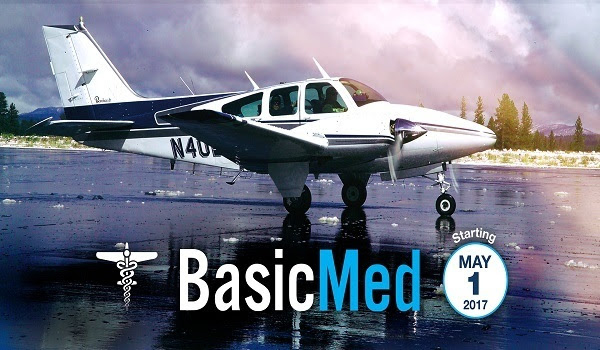
General aviation pilots can now prepare to fly under BasicMed without holding a Federal Aviation Administration (FAA) medical certificate as long as they meet certain requirements. They can fly under BasicMed beginning on May 1, the effective date of the January 10 final rule. It offers pilots an alternative to the FAA’s medical qualification process for third class medical certificates, while keeping general aviation pilots safe and flying affordable.
General aviation pilots may take advantage of the regulatory relief in the BasicMed rule or opt to continue to use their FAA medical certificate. Under BasicMed, a pilot will be required to complete a medical education course every two years, undergo a medical examination every four years, and comply with aircraft and operating restrictions. For example, pilots using BasicMed cannot operate an aircraft with more than six people onboard and the aircraft must not weigh more than 6,000 pounds.
A pilot flying under the BasicMed rule must:·
– possess a valid driver’s license;
– consent to a National Driver Register check;
– have held a medical certificate that was valid at any time after July 15, 2006;
– have not had the most recently held medical certificate revoked, suspended, or withdrawn;
– have not had the most recent application for airman medical certification completed and denied;
– have taken a BasicMed online medical education course within the past 24 calendar months;
– have completed a comprehensive medical examination with any state-licensed physician within the past 48 months;
– have been found eligible for special issuance of a medical certificate for certain specified mental health, neurological, or cardiovascular conditions, when applicable; and not fly for compensation or hire.
Pilots can read and print the Comprehensive Medical Examination Checklist and learn about online BasicMed online medical courses at www.faa.gov/go/BasicMed.