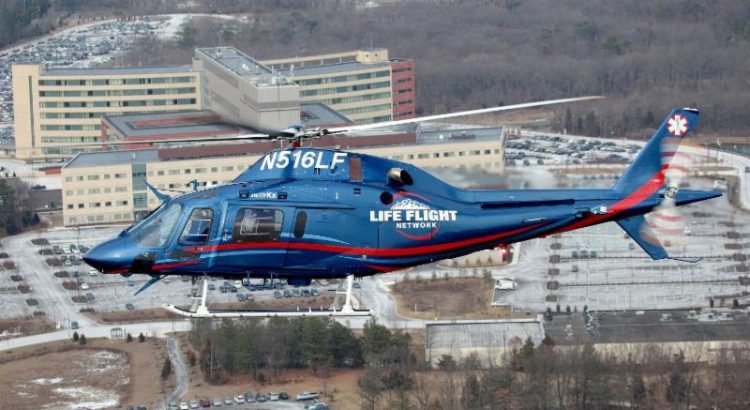
Astronics Corporation has announced that an amended Supplemental Type Certificate (STC) has been approved for the Max-Viz 2300 Enhanced Vision System (EVS). Offered by Astronics’ wholly owned subsidiary Astronics Max-Viz and obtained in cooperation with AVIO dg in Calgary Canada, the STC covers multiple Textron and Leonardo Helicopter models, including AW109 and AW119 aircraft.
With the U.S. Federal Aviation Administration (FAA) and Transport Canada Civil Aviation (TCCA) approvals, images produced by the Max-Viz 2300 can now be presented on MFDs (Multi Function Displays), PFDs (Primary Flight Displays), or on standalone displays depending on aircraft configurations. The amendment upgrades the wiring package to include VIVISUN® Switches for more effective mission utilization with NVGs (Night Vision Goggles) in search & rescue, emergency medical services, aerial firefighting, and military applications.
“Our technology provides pilots with an unprecedented level of situational awareness and safety,” said Tom Geiger, Business Unit Manager for Astronics Max-Viz. “We worked closely with AVIO dg to get this technology approved for daily missions on these Leonardo helicopters,” he added.
Astronics Max-Viz EVS provides improved safety and enhanced vision, enabling pilots to see more precisely in adverse weather conditions, such as haze, smoke, smog, and light fog, even on the darkest night. At night, pilots can also see and avoid clouds for a smoother ride. While landing, pilots using the Max-Viz EVS can identify the runway and view the terrain clearly to avoid wildlife and unlit obstructions.
A recent ruling from the FAA permitting properly equipped aircraft to fly certain Instrument Flight Rule (IFR) approaches to landing, in lieu of natural vision, is expected to drive additional acceptance of EVS technology. Of the over 3,250 installed Astronics Max-Vis EVS systems, approximately 60 percent are on fixed-wing general aviation aircraft and 40 percent are operating on helicopters. With Supplemental and Type Certificates in both fixed wing and rotor wing aircraft, Astronics Max-Viz offers products built on more than 15 years of success in enhanced vision systems. View the EVS offerings in detail at www.astronics.com/max-viz.
AVIO dg offers avionics system design, product design, electrical and structural design and substantiations, development and testing, aircraft livery design and drawings, aero medical HEMS, certification for human factors and ergonomic evaluations, advanced 3d printing/part creation, NVIS lighting designs, and repair designs. Avio dg will serve as the point of contact for obtaining new installations of the Max-Viz 2300 with this STC, and can be reached at www.avio-dg.com.