Robinson Helicopter Company (RHC) secured approval from EASA authority, Argentina, Japan, and India for its improved empennage on all Robinson helicopter models. This follows the Federal Aviation Administration’s (FAA) prior approval of the same configuration for the R66 in 2023 and R44 and R22 in 2024. The new empennage includes a symmetrical horizontal stabilizer and tailcone, is now standard on all newly manufactured Robinson helicopters.
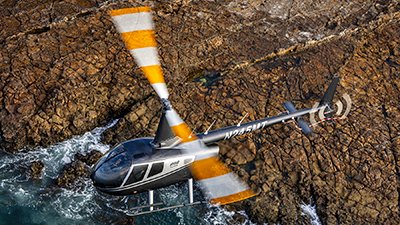
Since securing approval from the FAA, the company has delivered nearly 700 retrofit kits, in addition to about 250 new production aircraft with the new empennage. Robinson Helicopter is currently offering a retrofit kit for existing R22, R44, and R66 aircraft at a discounted rate of $3,600 USD through the end of December 2025. Horizontal stabilizers can be purchased through authorized dealers, service centers, or by calling Robinson Helicopter customer service.
The symmetrical horizontal stabilizer is a key improvement that enhances the safety and performance of Robinson helicopters. By improving roll stability, particularly during high-speed flights, it contributes to a smoother and safer flight experience. Additionally, the symmetrical stabilizer helps reduce the right-rolling tendency when the aircraft is operated outside of the approved flight envelope.
“This is a significant milestone in our commitment to continuous safety, reliability, and customer satisfaction around the world,” said David Smith, president and CEO of Robinson Helicopter Company. “This certification is a testament to our team’s tireless pursuit in enhancing the Robinson flying experience and setting new standards for safety and performance in the industry.”