JEKTA has revealed photographs of the 1:9 scale model of the PHA-ZE 100 amphibious flying boat that it is using to gather test data representative of the full-size aircraft.
While the final aircraft configuration will evolve based on data generated by operating the model in the air and on the water, the model is closely representative of the definitive PHA-ZE 100 design. Details include a distributed electric powerplant based on eight electric motors, advanced aerodynamic configuration and large cockpit and cabin windows.
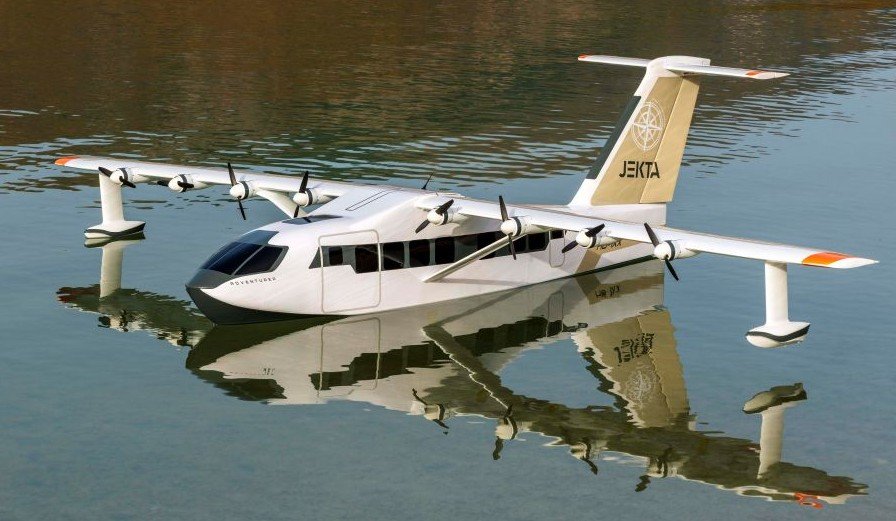
Trials are being performed in Italy, home of JEKTA Head of Design Max Pinucci. The country’s storied seaplane history has proven inspirational for Pinucci and the wider JEKTA team, while testing of the next-generation PHA-ZE 100 design is building on that legacy.
JEKTA CEO and co-founder George Alafinov says: “The 1:9 scale model is large enough to provide data representative of the full-size aircraft and is allowing us to efficiently expand the test envelope while verifying data already collected in our computer modelling. We will continue to refine the aircraft configuration based on findings from the model testing and feed back into our digital models, ensuring the aircraft’s maturity as we work towards introducing it to the global air transport network in 2030.”
With its diverse operational capabilities, adaptable interior configurations, and economically attractive operating parameters, the PHA-ZE 100 can support a growing range of operational demands. Since its launch in 2022, JEKTA has already confirmed more than USD$1.35 billion in forward PHA-ZE 100 customer commitments and is scheduled to begin production in 2030/2031.