By Jana Gottlieb
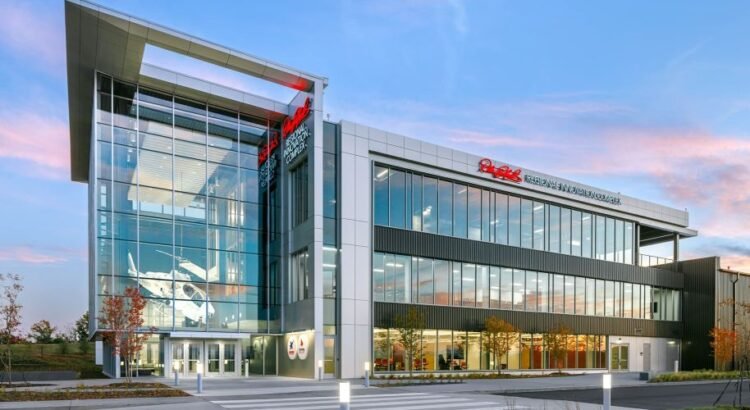
Walking through the Catawba Valley Community College (CVCC) Dale Earnhardt Regional Innovation Center in Hickory, North Carolina, visitors first encounter artifacts tied to the region’s military history before entering a hangar filled with 22 aircraft. Several invite visitors to get close, touch them and, in some cases, climb inside.
But the facility is more than a museum.
Beyond the aircraft collection, classrooms, simulators and technical training spaces prepare students for careers as pilots, aviation maintenance technicians and other skilled professionals. Visitors can observe portions of that training from public areas and see student work displayed in the lobby, creating a direct connection between aviation’s history and its future workforce.
Developed through a partnership among CVCC, the City of Hickory and the Hickory Aviation Museum, the innovation center offers a model for communities exploring how specialized training programs can serve employers, attract students and create broader public value.
A Partnership Built Around Complementary Needs
Each partner entered the project with a need that could have been addressed separately.
The City of Hickory owned the airport and recognized that the Hickory Aviation Museum, a nonprofit organization, had outgrown its existing facility. The museum had accumulated historic military aircraft, but many of them were stored outdoors because the existing hangar was too small. The initial project was simply to construct a basic metal hangar outside the airport fence to better preserve and display the collection.
The project’s purpose expanded when CVCC approached the city about co-locating workforce training programs using a state workforce development grant, transforming the project from a museum to a facility that serves education, workforce development, tourism and the community.
“Bringing the college, city and museum together allowed us to make the case for more than a new academic building,” said Randy Burns, Senior Executive Director for Campus Centers at Catawba Valley Community College. “We could show how the investment would support workforce development, preserve an important aviation collection and create a resource for the broader region.”
The CVCC Dale Earnhardt Regional Innovation Center was funded through an $18.7 million allocation from the North Carolina General Assembly for CVCC’s Workforce Innovation Center and millions of dollars in public and private donations raised by the Hickory Aviation Museum, including from the Dale Earnhardt Foundation.
The City of Hickory owns and operates the center, with CVCC providing educational programming and the museum managing its collection and visitor experience. Bringing those uses together required the design team to balance different operational, security and access needs while creating a cohesive facility.
Turning Education Into a Visitor Experience
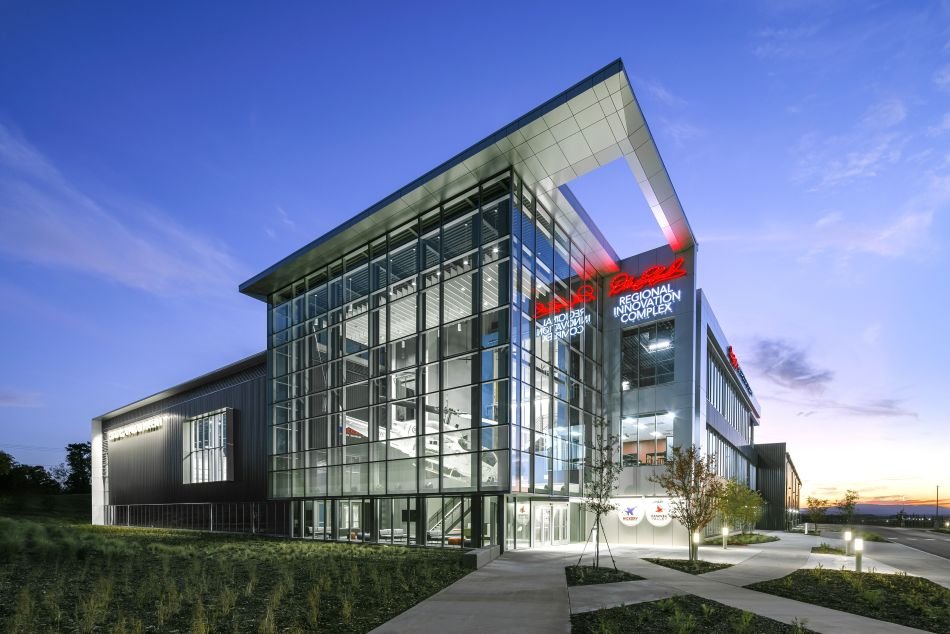
Creating intentional interaction between visitors and students became one of the project’s defining design goals. Visitors can observe portions of the training environment from public areas without entering active instructional spaces. A second-floor balcony overlooks the primary technical lab, giving guests a view of hands-on instruction while maintaining separation from equipment and student work areas. Large automotive showroom glass doors connect the lab with the lobby, allowing students to move completed projects or equipment out of the training space and into public view.
The design team was judicious about where visibility would provide the greatest value. Transparency can be expensive, and instructors may not want classes to feel as though they are constantly on display. The design team instead identified the places where visibility could provide the greatest value for recruitment, career awareness and public engagement.
For aviation workforce programs, this visibility can help build an early talent pipeline. Young visitors and their families see not only historic aircraft but also the range of people and skills needed to keep aviation moving — from pilots and maintenance technicians to professionals in mechanical, technical and safety-related roles.
The museum attracts families, veterans, aviation enthusiasts and tourists, giving CVCC a built-in audience that might never otherwise walk through the doors of a workforce training facility.
“The college gives the innovation center a forward-looking role by connecting our historic aircraft to the people who will operate, maintain and support the aviation industry in the future,” said Rodney Miller, Deputy City Manager for the City of Hickory.
Designing for Adaptability
While public engagement shaped the visitor experience, workforce readiness shaped the educational spaces themselves. The facility needed to support current aviation programs while remaining adaptable enough to accommodate future technologies and training needs.
The building supports aviation maintenance and testing, marine technology programs, flight simulation and other technical training aligned with emerging regional industry needs. The two-year aviation maintenance program is intended to prepare students for airframe and powerplant credentials, helping address growing demand as experienced aircraft mechanics retire. Four large classrooms can support mechanical instruction or other courses, while the simulator room can accommodate flight, public safety and heavy equipment training.
CVCC leaders anticipate the complex will serve 500 to 1,000 students, creating a significant pipeline into aviation, marine technology and other skilled careers.
The largest hands-on lab draws inspiration from labor union and trades training centers. The pre-engineered metal building provides a large, open volume that can accommodate six temporary training zones at once. Employers or academic programs can install equipment for several months or years, then remove it as technology and workforce needs change.
One area might be used for welding, while others support clean-room construction, conveyor assembly, air-handling systems or automotive work. Outside, a covered work area provides space for boats and other large equipment that cannot easily be accommodated in a conventional classroom.
The goal was not simply flexibility, but adaptability: preparing the facility for equipment, programs and teaching methods that may not yet exist. Doors and circulation routes were sized for larger machinery, electrical systems provide additional capacity and voltage options and utilities can be distributed from overhead or around the perimeter. Open spaces and reconfigurable walls further reduce permanent obstacles.
Rather than dictating how programs must operate, the facility gives CVCC room to respond as employer needs evolve and new technologies reshape workforce training.
Coordinating Design With Airport Operations
Designing for workforce training was only part of the challenge. Because the building sits adjacent to an active airport, the project also required close coordination with aviation operations and federal regulations.
McMillan Pazdan Smith’s in-house geographic information systems team prepared the location and elevation data required for review, helping the project clear the Federal Aviation Administration review on its first submission.
The design team also had to create a safe route for moving aircraft from the runway into the museum hangar. The museum’s P-3 Orion was the biggest challenge because portions of its tail would not pass through an opening that all other aircraft could easily fit through. Two smaller sliding sections were incorporated into the primary hangar door, allowing it to accommodate the aircraft’s tail height.
Because the hangar is a pre-engineered structure with specified load limits, the team had to identify the weight and location of each suspended aircraft before finalizing the structural system. Unlike conventional steel construction, those loads could not be planned generically.
Preserving History With Practical Design
While airport operations and workforce training influenced many design decisions, the museum experience remained equally important.
Visitors begin their experience alongside glass-fronted display walls containing uniforms, helmets, parachutes and artifacts connected to local veterans and military history. Staff can access the exhibits from behind the wall, allowing the museum to display and rotate smaller artifacts without extensive custom casework.
The theater, offices and other support functions are consolidated within a rectangular central structure inside the hangar, preserving open floor area for the aircraft collection. The roof of the theater and offices is a mezzanine into the hangar, providing great views of the aircraft and a large space for hosting events in the museum. Visitors then exit through a gift shop.
An unfinished upper-level space is planned for a future restaurant and terrace overlooking the runway and surrounding mountains. Independent elevator access will allow it to operate when the academic and museum areas are closed, supporting the city’s goal of making the facility a destination beyond class and museum hours.
A Regional Approach to Workforce Education
The project also reflects a broader lesson about workforce development: Specialized training facilities often create the greatest value when they serve an entire region rather than a single community.
Not every college needs its own aviation program, simulator facility or hangar-sized technical lab. Those investments may make more sense when they can draw students from a larger area, serve multiple employers and avoid duplicating expensive resources.
North Carolina is home to the nation’s third-largest community college system, with 58 serving communities across the state. Before defining the Hickory programs, CVCC examined offerings in neighboring counties to identify gaps it could fill rather than replicate existing offerings.
“Specialized workforce programs should be planned regionally rather than duplicated from county to county,” Burns said. “The goal is to determine where the need exists, where employers can support the program and where the investment can serve enough students to remain valuable over time.”
That regional approach is increasingly important as aviation employers confront shortages across flight, maintenance and technical occupations. Employers can help identify emerging skills, colleges can adapt instruction and public partners can align capital investment with broader aviation and economic development priorities.
The CVCC Dale Earnhardt Regional Innovation Center brings those roles together under one roof. Visitors come to see the historic aircraft but leave with a clearer understanding of the careers that keep the industry moving. Students gain access to training environments designed to evolve alongside future technologies, and employers benefit from a stronger talent pipeline. By connecting aviation history with workforce education, the facility makes both more relevant to the community and to the future of aviation.
Jana Gottlieb is a Higher Education Practice Leader and Principal at McMillan Pazdan Smith