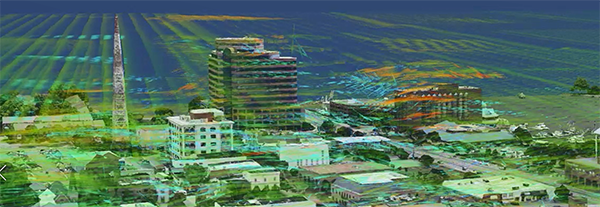
Photo above – TruWeather Solutions software simulates and display winds, allowing analysis to identify optimal locations for weather sensors that will support drone operations. Orange areas depict high wind speeds that would not be forecasted by existing weather reporting methods without additional sensing instruments.
AeroX has contracted with low-altitude weather specialist TruWeather Solutions to assess weather conditions across North Carolina and engage the community in planning how to build the weather infrastructure required to expand existing and future drone and air taxi service.
AeroX was awarded funding by the North Carolina General Assembly to build an urban advanced air mobility system in North Carolina, with an understanding that these services will help carry cargo and, ultimately, people across the region and state. AeroX identified weather as a critical component when building this system.
“We’re conducting a statewide study so we can be ahead of the game, identifying optimal connection points that can provide weather data at the speed with which companies and communities are ready to expand AAM service,” said AeroX President Basil Yap.
Weather conditions such as wind, rain, fog and storms significantly impact a drone’s ability to operate and function in low-altitude airspace, whether that is within densely developed urban areas or in rural, coastal and mountainous terrains. Knowing where weather hazards exist and where to deploy sensors that can provide critical weather data are key steps in enabling broad and routine drone use.
TruWeather Solutions will assess the weather conditions and potential hazards in the state that can make drone operations challenging. It will then convene drone manufacturers, uncrewed air traffic management service providers, weather partners and others to understand their particular needs for weather data, report on the study’s findings about low-altitude weather conditions in the state and determine where to begin locating weather infrastructure to support AAM operations.
“Our goal is to provide data that allows companies and communities to deploy drone and air taxi services in the most cost-effective, highest value possible,” said Chris Zarzar, commercial product manager for TruWeather Solutions. “At the end of this study, we expect to be ready to purchase and deploy weather sensors at locations across the state, as well as support public agencies that seek to enable AAM in other communities and regions.”
The study kicked off in January and is expected to be completed in May. Anyone with plans to deploy AAM or interest in attending the workshops should submit their contact information to www.tinyurl.com/AeroXworkshop or email info@ncaerox.com.