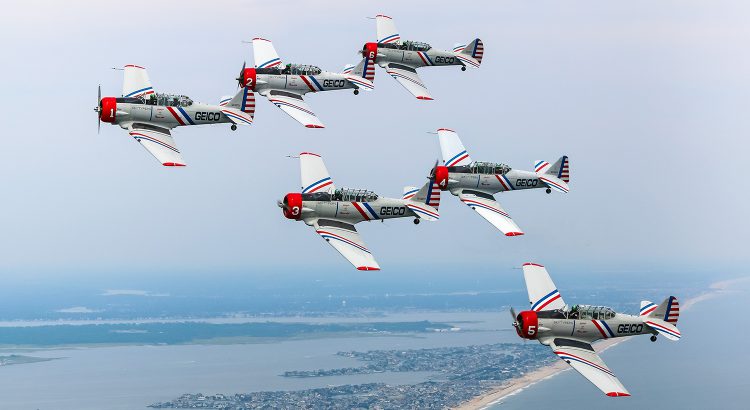
Millions of New Yorkers saw a fleet of six WWII airplanes promote safety awareness messages of thanks and hope in the skies above New York City last week. The airplanes flew over hospitals creating giant messages in the sky that were as tall as the Empire State Building, spanning 5-10 miles and could be seen in a 15-mile radius. The planes also typed their message over Long Island, including over Sachem, and Westchester County.

The GEICO Skytypers, a fleet of vintage airplanes, “skytyped” messages over hospitals in the five boroughs with positive affirmations and gratitude for first responders, healthcare and grocery/retail workers, and all those affected by COVID-19. The intent was to lift spirits and create awareness in light of the current global pandemic.
The Skytypers fleet left from Republic Airport on Long Island for the flight above the NY metro area’s hospitals starting their first messages at approximately 11:30 a.m. over Manhattan. They then flew past the Statue of Liberty and down the Hudson River and circled over the five boroughs before delivering messages above Long Island. Their route started over Norwalk, CT following the shoreline thru lower Westchester county circling NYC and the five boroughs then heading out over Long Island.
“We couldn’t think of a better way to thank all New Yorkers for their commitment to health and safety, especially those on the front lines,” says Larry Arken, squadron commander and team flight lead of the GEICO Skytypers.