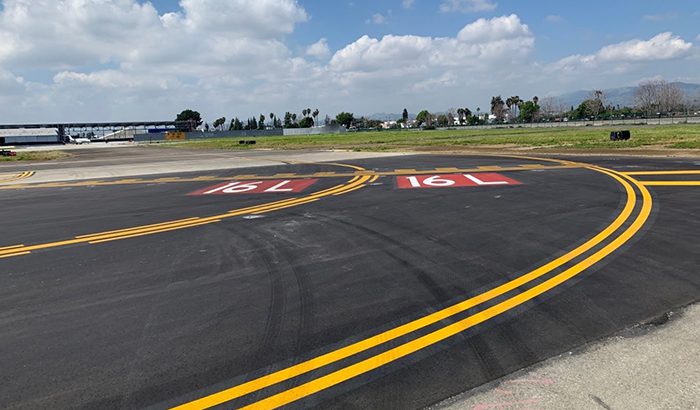
Earlier this month, Los Angeles World Airports (LAWA) completed phase one of the nine-phase project to rehabilitate Van Nuys Airport’s (VNY) Taxiway Bravo. The $26.3 million, 14-month project will ensure a minimum 20-year taxiway lifespan and make improvements to increase safety. Phase one of the project consisted of a full-depth restoration of the north end of Taxiway Bravo. In addition, LAWA added new enhanced markings, a widened center line, energy saving LED in-pavement guard lights, LED elevated guard lights, a new blast fence east of runway 16L and signage upgrades.
“With this multimillion-dollar investment in Van Nuys Airport, we are ensuring the safety and longevity of one of the busiest general aviation airports in the world,” said Deborah Flint, Chief Executive Officer, LAWA. “The work on this taxiway has been on budget, despite challenging weather conditions earlier this year, and we’re excited to move to the next phases of construction.”
“From private jet passengers to propeller plane pilots, at Van Nuys Airport our users expect an experience that is second to none,” said Flora Margheritis, Airport Manager, VNY. “The update to Taxiway Bravo will improve the experience for our operators and guests, and the upgrades will ensure the taxiway lasts for decades to come.”
For the latest construction schedule and closure information for the Van Nuys Airport Taxiway Bravo rehabilitation project, please visit https://www.iflyvny.com/en/taxiwayproject.