Story and photo by Richard McManus
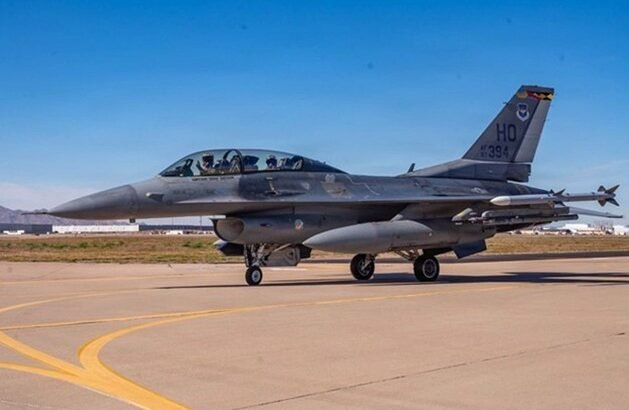
F-16 Fighting Falcons from Holloman Air Force Base and F-35A Lightning II aircraft from Luke Air Force Base have started week-long joint training missions designed to strengthen interoperability and reinforce the Air Force’s ability to execute complex, forward-deployed combat operations.
The training brings together Airmen from multiple specialties to plan, generate and execute missions that mirror the demands of real-world operations. By integrating fourth- and fifth-generation aircraft, the training focuses on leveraging each platform’s strengths to accomplish shared objectives in contested environments.
“This type of joint training is critical,” said Col. John Ethridge, commander of the 49th Wing, Holloman Air Force Base. “It ensures our Airmen can seamlessly operate together, regardless of aircraft or home station, and rapidly adapt to mission requirements anywhere in the world.”
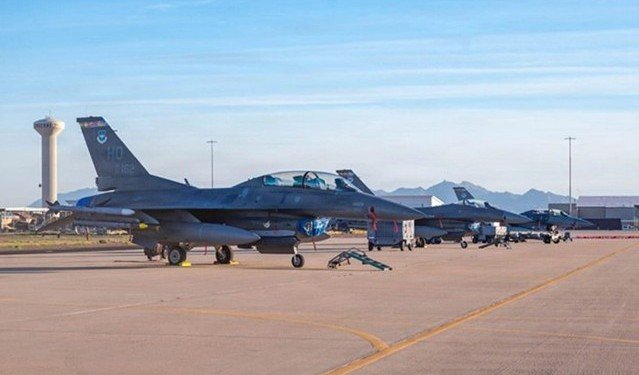
The F-35’s advanced sensors and data-fusion capabilities allow pilots to detect, track and share threat information across the formation, while the F-16s provide flexible, multi-role capabilities to execute mission objectives. The combined force demonstrates how information sharing and coordinated tactics increase survivability and combat effectiveness.
“Mastering fighter integration now, in the training phase, sets our pilots up for greater lethality when they deploy,” said Brig. Gen. David Berkland, 56th Fighter Wing commander.
Success in the air relies on coordinated efforts on the ground. Maintenance Airmen from both bases work side by side to keep aircraft mission-ready, executing inspections, repairs and turnarounds under demanding timelines. Weapons crews safely and efficiently configure aircraft with the required munitions, ensuring each sortie launches fully capable.
Pilots from both platforms emphasize the value of training together, noting that these missions enhance trust, communication and shared understanding of each aircraft’s role in a fight. Mission planning and execution require constant collaboration, reinforcing procedures that will be essential during future forward deployments. The integration also provides valuable lessons for command and control teams, who synchronize airspace, logistics and operational timelines to support simultaneous operations from multiple units.
By training as an integrated force, Airmen sharpen skills that translate directly to real-world operations, where teams must rapidly deploy, integrate and sustain combat power in contested environments.
“This is how we stay ready,” Berkland said. “We build ready teams through realistic training, integrated, disciplined, and prepared to execute wherever airpower is needed.”