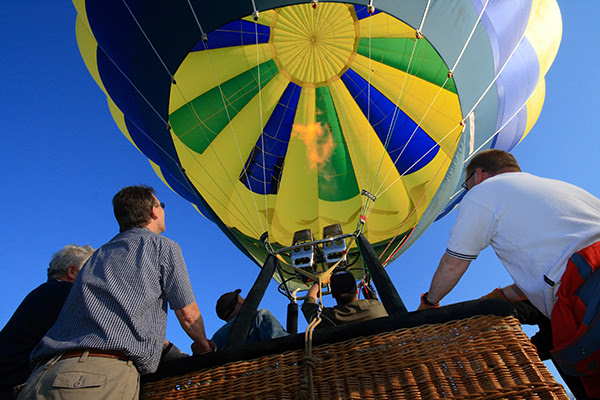
The Federal Aviation Administration (FAA) proposed a rule on Tuesday requiring commercial hot-air-balloon pilots to hold medical certificates when operating for hire. The rule would mandate a second-class medical certificate, the same standard required for commercial pilots.
“Balloon pilots are responsible for the safety of their passengers,” FAA Administrator Steve Dickson said. “This proposed rule would ensure that balloon pilots meet the same medical requirements as pilots of other commercial aircraft.”
Currently, commercial balloon pilots are exempt from the medical requirement. In the FAA Reauthorization Act of 2018, Congress directed the FAA to revise the medical certification standards for commercial balloon pilots. The draft rule also addresses a National Transportation Safety Board (NTSB) recommendation that the FAA remove the exemption.
The FAA in recent years took steps to increase the safety of hot-air-balloon tourism by working with the Balloon Federation of America (BFA) on an accreditation program. The program includes voluntary standards for pilots and operators and offers multiple tiers of BFA safety accreditation.
The FAA will publish the draft rule in the Federal Register in November, and the public will have 60 days to provide comments. After the comment period closes, the FAA will review all comments before publishing a final rule.