BAE Systems and Heart Aerospace announced a collaboration to define the battery system for Heart’s ES-30 regional electric airplane.
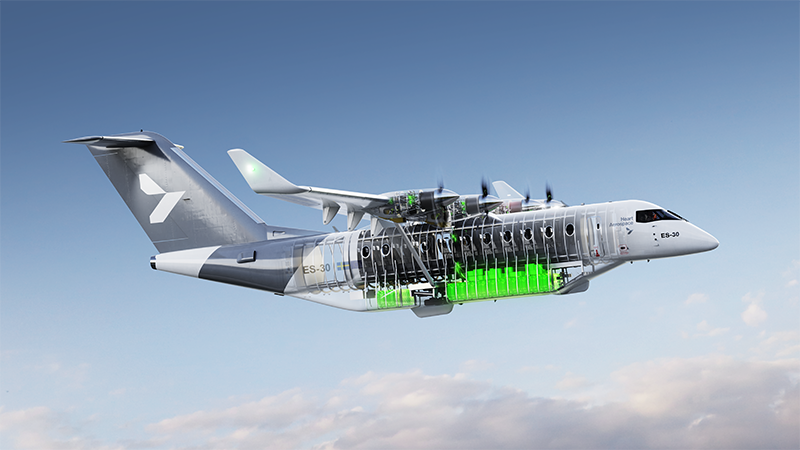
The battery will be the first-of-its-kind to be integrated into an electric conventional takeoff and landing (eCTOL) regional aircraft, allowing it to efficiently operate with zero emissions and low noise.
“Our industry-leading solution builds on decades of expertise delivering technologies and systems needed to progress sustainable transportation,” said Ehtisham Siddiqui, vice president and general manager of Controls and Avionics Solutions at BAE Systems. “We are delighted to collaborate with Heart Aerospace on the innovative battery system for its electric airplane.”
The program will leverage more than 25 years of BAE Systems’ expertise in electrifying large, heavy-duty industrial vehicles. Today, the company has over 15,000 power and propulsion systems operating in service across the globe. Work on the program will be conducted at the company’s state-of-the-art facility in Endicott, New York.
“BAE Systems’ extensive experience in developing batteries for heavy-duty ground applications, and their experience in developing safety critical control systems for aerospace, make them an ideal partner in this important next step for the ES-30 and for the aviation industry,” said Sofia Graflund, chief operating officer at Heart Aerospace. “We look forward to decarbonizing air travel together.”
The ES-30 airplane will be powered by four electric motors, and has an all-electric range of 200 kilometers, an extended reserve hybrid range of 400 kilometers with 30 passengers and ability to fly up to 800 kilometers with 25 passengers.
The ES-30 will also have a cost-effective and scalable upgrade path as future battery technology matures. The battery upgrade roadmap allows for increased usable energy at the same weight, resulting in longer flight durations and expanded route options.
Heart Aerospace has a total of 230 orders and 100 options for the ES-30, along with letter of intent for an additional 108 airplanes.