Four prominent Virginians will be inducted on November 7th as members of the Class of 2026 of the Virginia Aviation Hall of Fame. The induction dinner and ceremony will be hosted by the Virginia Aeronautical Historical Society at the elite Ford’s Colony Country Club in Williamsburg, Va.
The four inductees include, in alphabetical order, Robert Bowen (Virginia Beach), Dr. Bruce Holmes (Williamsburg), Lucille Kent (Lynchburg), and Greg Principato (Staunton).

Vetting and selection of nominees is overseen by the Virginia Aeronautical Historical Society (VAHS). Photos and summaries of the contributions of inductees are currently enshrined at airports and museums throughout Virginia and on the VAHS website (https://www.vahsonline.com).
“I can’t imagine a more meaningful honor than being inducted into the Virginia Aviation Hall of Fame,” Greg Principato told the SAJ. “I began my immersion in aviation working for Virginia Governor Gerald L. Baliles. As the years went by and my work became national and then global in scope I lived in Virginia. We have an incredible array of aviation resources here and countless inspiring aviation professionals, many of whom are members of the Virginia Aviation Hall of Fame. It is humbling to know I will be among their number.”
Past VAHS Chairman and Hall of Fame alumni Brig. Gen. David Young (USAF, retired) stated that “the VAHS Board of Directors and our selection committee take great care to review each nomination and to ensure that the most deserving in Virginia’s rich aviation community are recognized by induction into the Virginia Aviation Hall of Fame.”
Virginia Aviation Hall of Fame Chairman Tim McSwain further stated that “all four inductees represent the finest traditions of the Virginia Aviation Hall of Fame and reflect great credit on the Virginia Aeronautical Historical Society, the profession of aviation, and the community served so ably by our inductees for decades.”
A total of 18 individuals were nominated for consideration for the Hall of Fame, and four were selected through a rigorous vetting process.
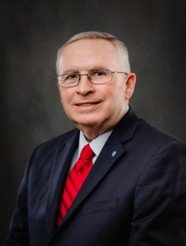
Robert Stuart Bowen was born into a family of Virginia commercial watermen in the historic Northern Neck. His father, Robert Joseph Bowen, and mother, Lois Cockrell Bowen, raised Robert with his sister, Nancy, in a small oystering village on the Great Wicomico River in Northumberland County, and true to his heritage as the fourth generation of his family to work in the commercial fishing industry, on the day after his graduation from Northumberland County High School in 1970, Robert began his summer job at a Reedville menhaden fish processing plant. Robert worked three more summers while attending Old Dominion University. During his undergraduate career he was elected to the Student Senate, initiated into Kappa Alpha Order where he served as president of his Chapter. In the summer of 1974 he stayed in Norfolk and worked as an aircraft line serviceman at the Norfolk International Airport’s Piedmont Aviation’s general aviation facility. After trying various jobs following graduating with a Bachelor’s Degree in Business Management Robert returned in 1977 to Piedmont Aviation, which led to a succession of promotions to Assistant Manager. In November 1987 he received a job offer from the Norfolk Airport Authority that led to a succession of promotions from Director of Operations,1988 to 2009, Deputy Executive Director,2009 to 2016, and Executive Director 2016 to 2022, and finally retirement on May 1, 2022, which marked the completion of a 45-year career at the Norfolk International Airport, 11 years with Piedmont Aviation and 34 years with the Norfolk Airport Authority. Virginia Business Magazine recognized Robert in its 2020 and 2021 Virginia 500 Lists of Virginia’s most powerful and influential leaders in business, government, politics and education. Among the proclamations and awards during his career, the 2022 session of the Virginia Assembly the House and Senate agreed to House Joint Resolution No.416 commending Robert on the occasion of his retirement and expressing the General Assembly’s admiration for his contributions to the Commonwealth. On July 1, 2024, Virginia Governor Glenn Youngkin honored Robert with a Four Year Appointment to the Virginia Aviation Board.
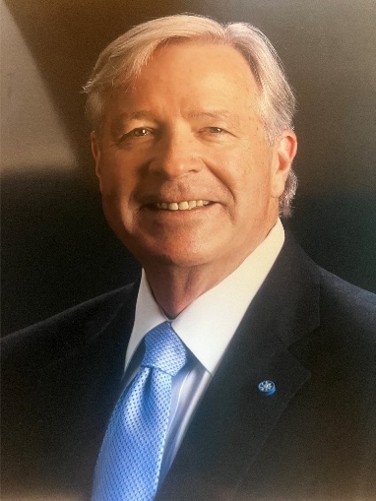
Dr. Bruce J. Holmes, D.E. (b. 1948), an aerospace engineer and pilot, served 33 years at NASA Langley Research Center in Hampton, Virginia. He holds bachelor’s, master’s, and Doctor of Engineering degrees in aerospace engineering from the University of Kansas and served in the Kansas Army National Guard (CH-54 SkyCrane unit). His natural laminar flow research demonstrated the practicality of low-drag aerodynamics, earning him the NASA Exceptional Engineering Achievement Medal in 1986. In 1994 he created and led the fifty-member AGATE Alliance, which revitalized American general aviation and produced the “Highway in the Sky” cockpit concept. He later led NASA’s Small Aircraft Transportation System project and helped establish the Next Generation Air Transportation System (NextGen). Holmes retired in 2007 as Langley’s Chief Strategy Officer and received the Robert J. Collier Trophy as a member of the ADS-B team.
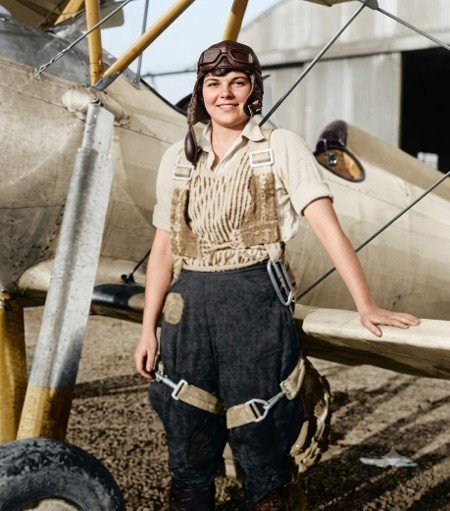
Lucille Chaffin Kent was a pioneering aviator in Virginia in the mid-20th century. She trained an entire generation of young men to help win World War II and later serve as commercial pilots around the world. Kent was one of the first women in the Commonwealth—and probably the southeast United States—to receive all of her round ground instructor’s ratings in aeronautics including meteorology, elementary and advanced navigation, civil air regulation, and aircraft engines. She was also one of the first pilots in Virginia to receive an instructor rating on the Link Trainer. This training was necessary to run and teach at a full-time ground school, which Kent directed at Preston Glenn Airport in Lynchburg, Virginia, during World War II. Specifically, because of Kent’s expertise, this was the first known, full-time ground school with this training ability in Virginia and the southeast United States. Kent exemplifies the crucial role women played in training men to fly during World War II. According to the Smithsonian, she was one of only 50 women in the United States who trained pilots under a War Training Service Contract. At the beginning of the war, U.S. Civil Aeronautics Administration Administrator C.I. Stanton stated, “It is my opinion that since women have always excelled in instructing and have done most of the teaching of our nation, this should be their natural function in aviation. Our problem is to give the 1,000,000 boys who will graduate into the draft each year, flight training. I believe we should train at least 200,000 of them each year. To do that, we shall need at least 5,000 women instructors.” Kent was one of these crucial teachers at a time when her country needed her most. Lucille Kent is remembered by the many aviators who worked with her or knew her, including Woody Edmondson, who described her as “the key” to making everything work. She was variously described as “Our Amelia Earhart” and “the linchpin.” Kent was beloved because of her competence, tireless work ethic, and her excellence—even while she was resented by some cadets and trainees who did not want to be taught by a woman. In 1948 Kent wrote The Complete Aeronautics Course Simplified, which was hailed by Woody Edmondson (a Virginia Aviation Hall of Fame member) as the most complete and easy-to-understand manual for general aviation and pilot training.
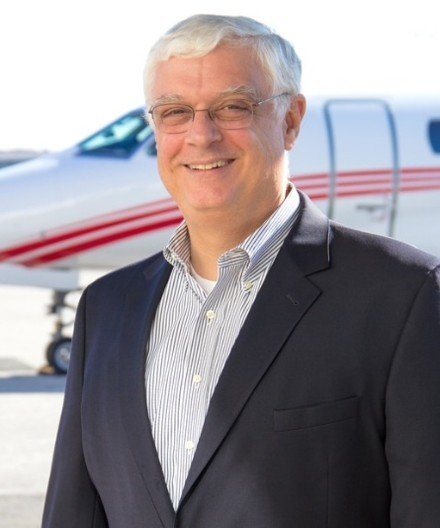
Greg Principato is President of the Federation Aeronautique Internationale, the World Airsports Federation as recognized by the International Olympic Committee. He’s the fifth American president in FAI’s 121 year history. Previously, he served as President & CEO of Airports Council International – North America (2005-13), the National Association of State Aviation Officials (2014-16) and the National Aeronautic Association (2016-23). Earlier in his career he served in the administration of Virginia Governor Gerald L. Baliles where he was heavily involved in efforts to create the Metropolitan Washington Airports Authority and what became the Udvar Hazy Air & Space Museum. In 1993 he was Executive Director of the National Commission to Ensure a Strong Competitive Industry. He has a BA from the University of Notre Dame and an MA from the University of Chicago. He and his wife live in Staunton