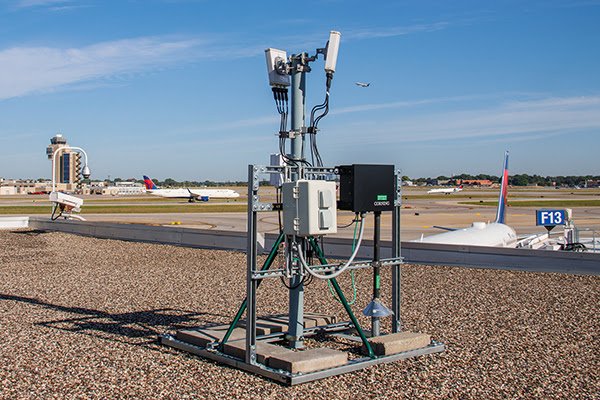
Photo – A new private 5G network provides enterprise-grade connectivity across the MSP Airport campus, including the airfield. Courtesy of the Metropolitan Airports Commission
Minneapolis-St. Paul International Airport (MSP) has deployed a new private 5G network that will improve connectivity to vital operational and safety systems that control, monitor and support daily activities.
MSP is among the first U.S. airports to shift from traditional wired systems to a modern private 5G platform with the deployment of Ericsson’s Private 5G network. The system connects critical operations across MSP’s busy four-runway airfield, which supported more than 342,000 aircraft operations and served over 36 million passengers in 2025.
“Transportation, public safety, maintenance, security and other airport operations all depend on connectivity. We are basically running a city without residents,” said Eduardo Valencia, chief information officer for the Metropolitan Airports Commission (MAC), which owns and operates MSP. “This dedicated wireless infrastructure provides enterprise-grade connectivity across our 5-square-mile campus to support the complex applications that enable us to maintain safe and efficient operations.”
Rather than expanding traditional Wi-Fi infrastructure or investing in additional fiber, the new system improves mobility, reliability and coverage for a wide range of airport systems, including camera networks, ticketing equipment, vehicle devices and other mobile equipment.
An early use case helped improve video monitoring capabilities for MSP’s tram system.
“Traditionally, our cameras relied on wired connectivity. Private 5G now enables continuous video access without interruption, which is especially important in a dynamic airport environment,” said Bill Boyd, director of infrastructure and operations for the MAC’s Information Technology department. “The private 5G network will also support future evolutions in data analysis, automation and operational awareness that airport ecosystems rely on.”
While expanding its own uses for the new private 5G network, the MAC also has plans to share the connectivity with airlines, concessionaires and other airport partners.