Asheville Regional Airport (AVL) served 2,240,877 million passengers in 2025, marking the second-busiest year of passenger utilization in the airport’s history. This achievement underscores the region’s continued demand for air travel and highlights AVL as a vital and resilient gateway to western North Carolina.
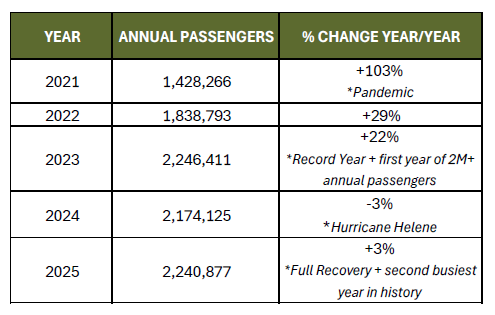
Despite significant challenges, including impacts from Hurricane Helene and ongoing terminal construction, AVL demonstrated remarkable resilience and sustained passenger growth.
“Reaching 2.24 million passengers in 2025 in the wake of unexpected impacts and major construction is a tremendous accomplishment,” said Lew Bleiweis, President & CEO of the Greater Asheville Regional Airport Authority. “The region has moved forward with resilience and so has its airport. This performance reflects the strength of our community’s support, the confidence of our airline partners, and the region’s continued appeal as both a destination and a place to live and work.”
AVL continues to be a critical economic driver for western North Carolina, supporting jobs, visitor spending, and broader regional growth. Growth across AVL’s air service network remained strong throughout the year, highlighted by the addition of new nonstop routes and more airline seats for sale to existing routes. Looking ahead into 2026, travelers will see increased frequencies and capacity to key markets served by five airlines: Allegiant, American, Delta, Sun Country and United.