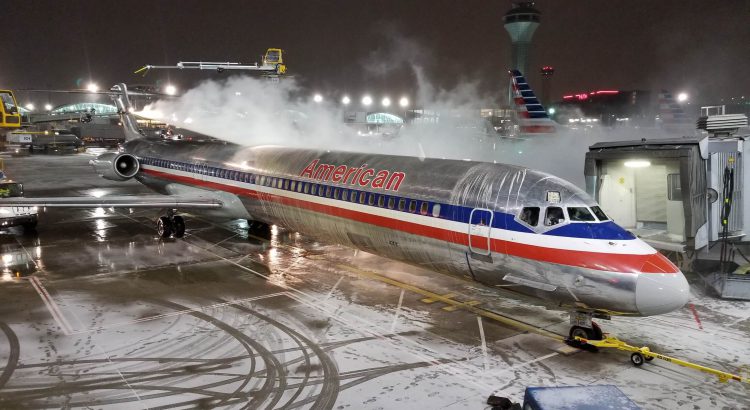
Photo above by Thomas Beam –
American Airlines is retiring the last of its McDonnell Douglas MD-80 fleet today as most of the remaining 26 aircraft take their final flights to Roswell, New Mexico (ROW). The MD-80, also known as the Super 80, was the workhorse of the airline’s fleet throughout the 1980s and beyond.
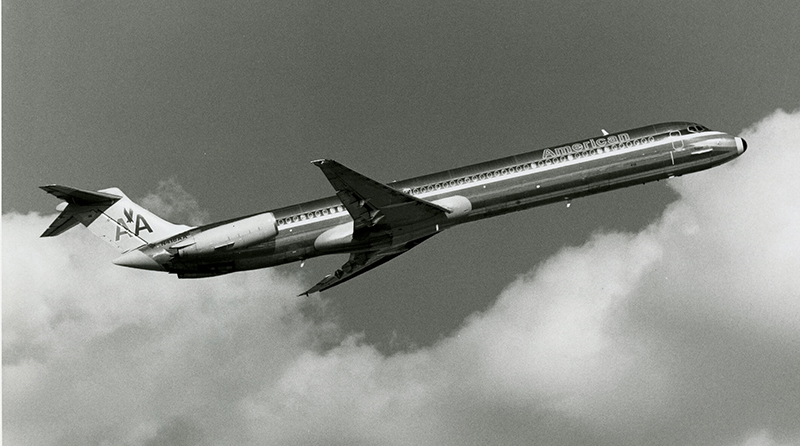
The Super 80 era began at American in May 1983 with three aircraft serving six cities — Dallas-Fort Worth (DFW); Detroit (DTW); New York City (LGA); Memphis, Tennessee (MEM); Nashville, Tennessee (BNA); and Ontario, California (ONT). When introduced, the MD-80 was one of the most fuel efficient commercial airplanes in the sky. American was the first of the large U.S.-based airlines to introduce the aircraft to its fleet and, by 2003, was operating 362 of the iconic planes, representing approximately one-third of all MD-80s ever produced by McDonnell Douglas.
American’s final MD-80 revenue flight, American Flight 80, is scheduled to depart DFW for the last time at 9 a.m. bound for O’Hare International Airport in Chicago. From there, the plane will ferry to Roswell to join the other MD-80s retiring today.
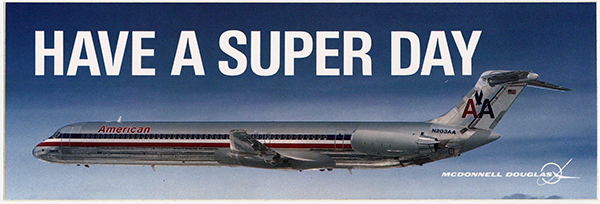
The retirement of the MD-80 marks the end of an iconic era in American’s history. Looking to the future, American continues to modernize its fleet with newer fuel-efficient aircraft that offer customers more highly sought-after amenities like industry-leading high-speed Wi-Fi and more inflight entertainment and access to power.